
Exploring Frank Lloyd Wright’s Yodoko Guest House in Ashiya
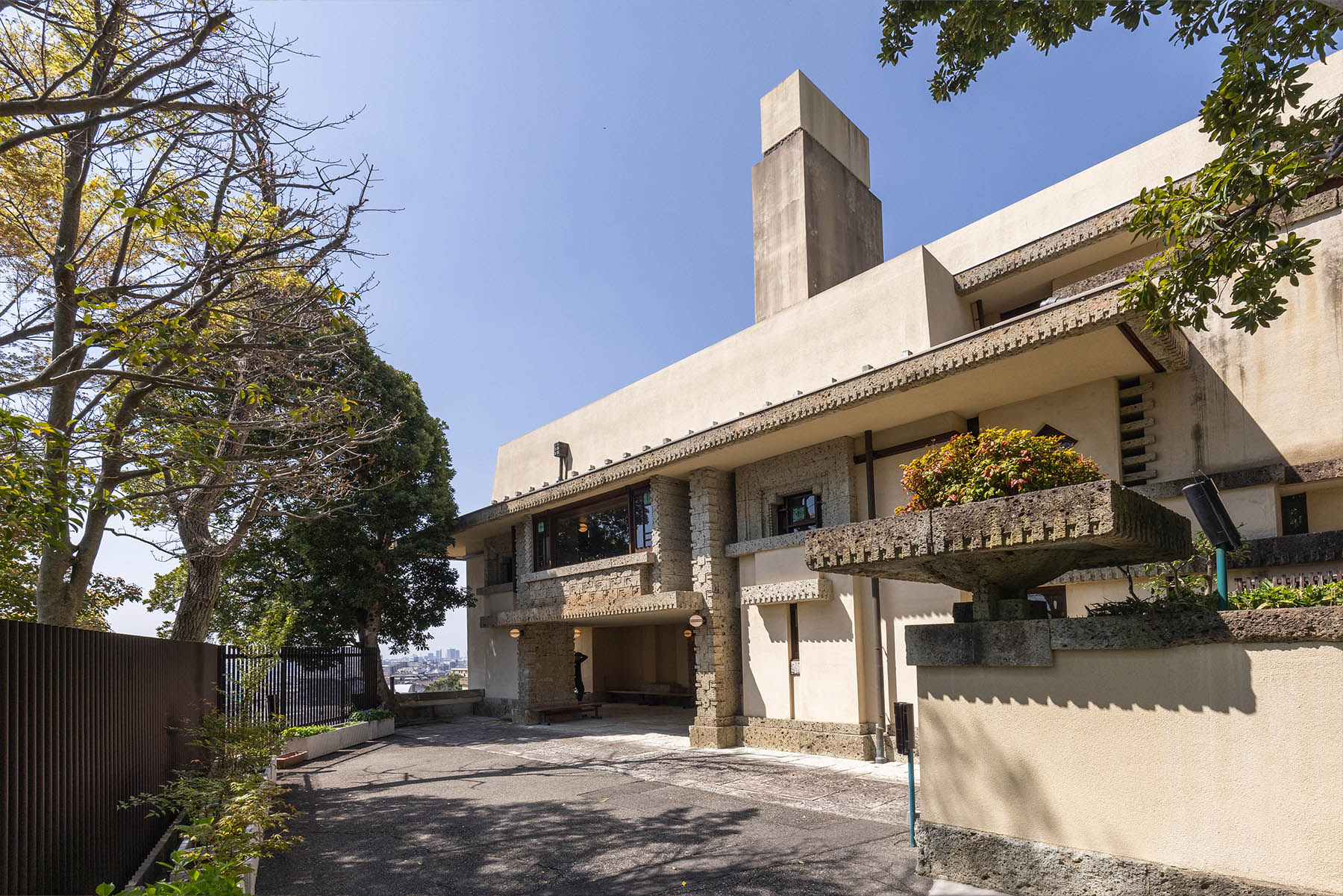
The Yodokō Guest House is a private home turned museum built in 1924 by Frank Lloyd Wright for prominent sake brewer Tazaemon Yamamura. The house is located on a small hill along the Ashiya River in Ashiya City, an upscale residential district only 20 minutes from central Osaka. It is one of only three Wright built projects that currently exist in Japan and is a must visit if you are in the Kansai / Osaka area.
Luxurious Villas for Kansai Elites
Constructed between 1923 and 1924 during the Taishō era (1912–1926), the residence emerged at a moment when Japan was rapidly embracing Western artistic and architectural ideas. The Hanshin region—stretching between Kobe and Osaka—had become a prosperous hub for sake production, supported by exceptional water sources and efficient distribution through its major port cities.
As several sake breweries grew enormously wealthy, a new class of Kansai elites began investing in luxurious hillside villas in stylish suburban neighborhoods. This surge of cultural sophistication and architectural ambition helped shape what is now recognized as Hanshinkan Modernism, a regional expression of modern lifestyle and design.
The Yamamura Residence—later known as the Yodokō Guest House—was commissioned by Tazaemon Yamamura, whose family had long been established in the Kansai sake industry. Frank Lloyd Wright was introduced to the Yamamuras through his Japanese apprentice Arata Endo, whom he met while working on the former Imperial Hotel. After completing the design, Wright entrusted on-site execution to Endo, who ensured the project adhered closely to Wright’s vision.
Harmonizing Nature and Architecture
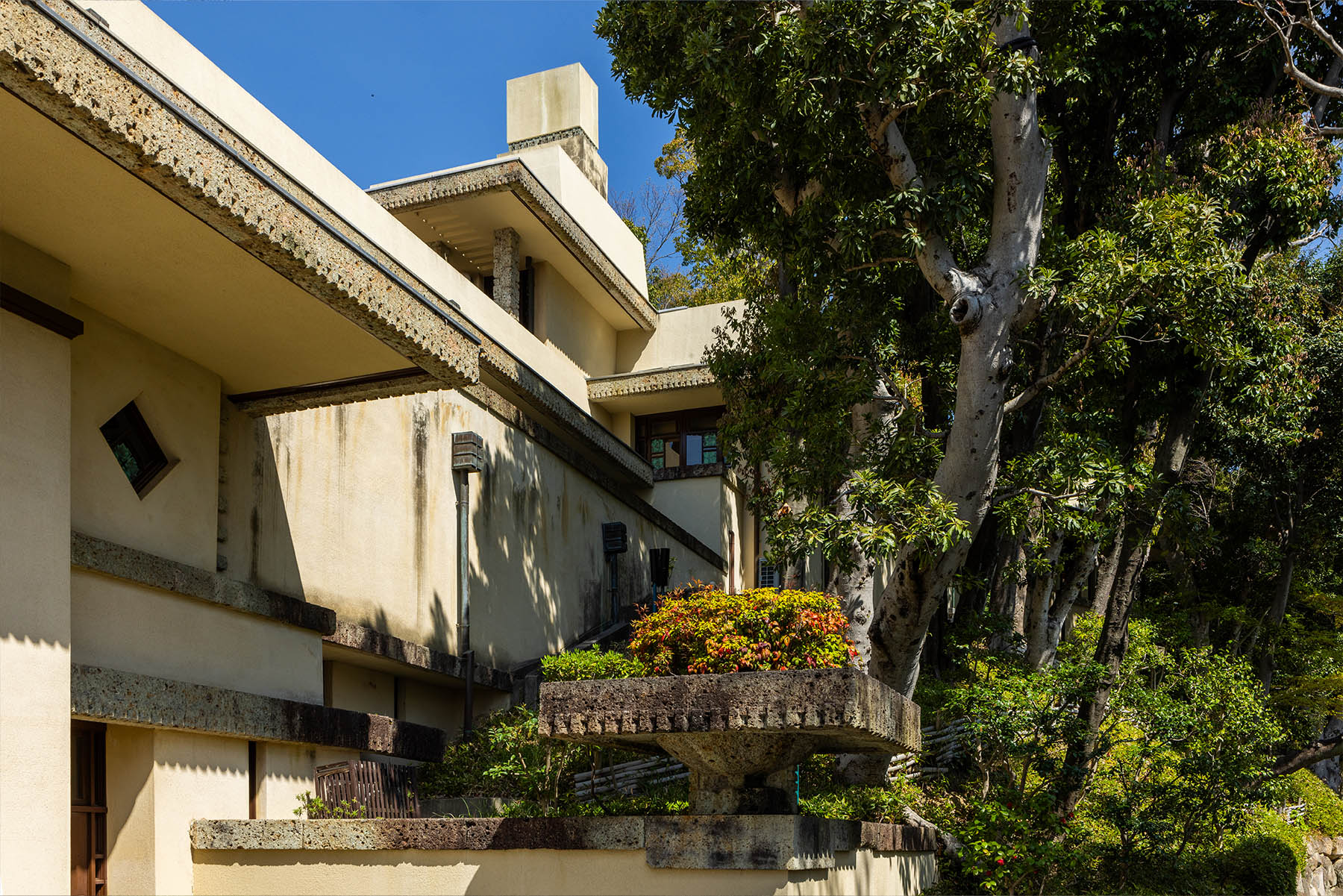
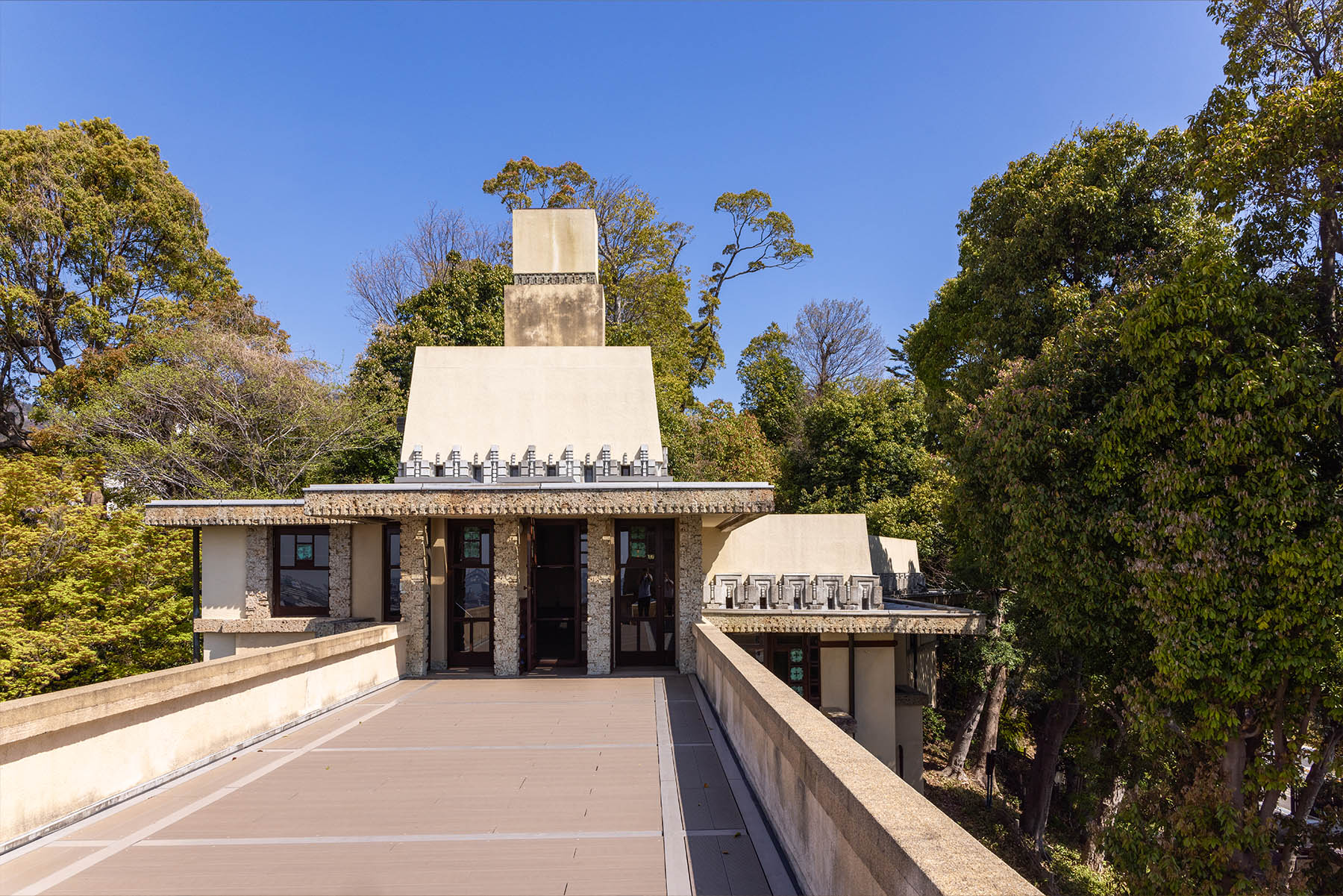
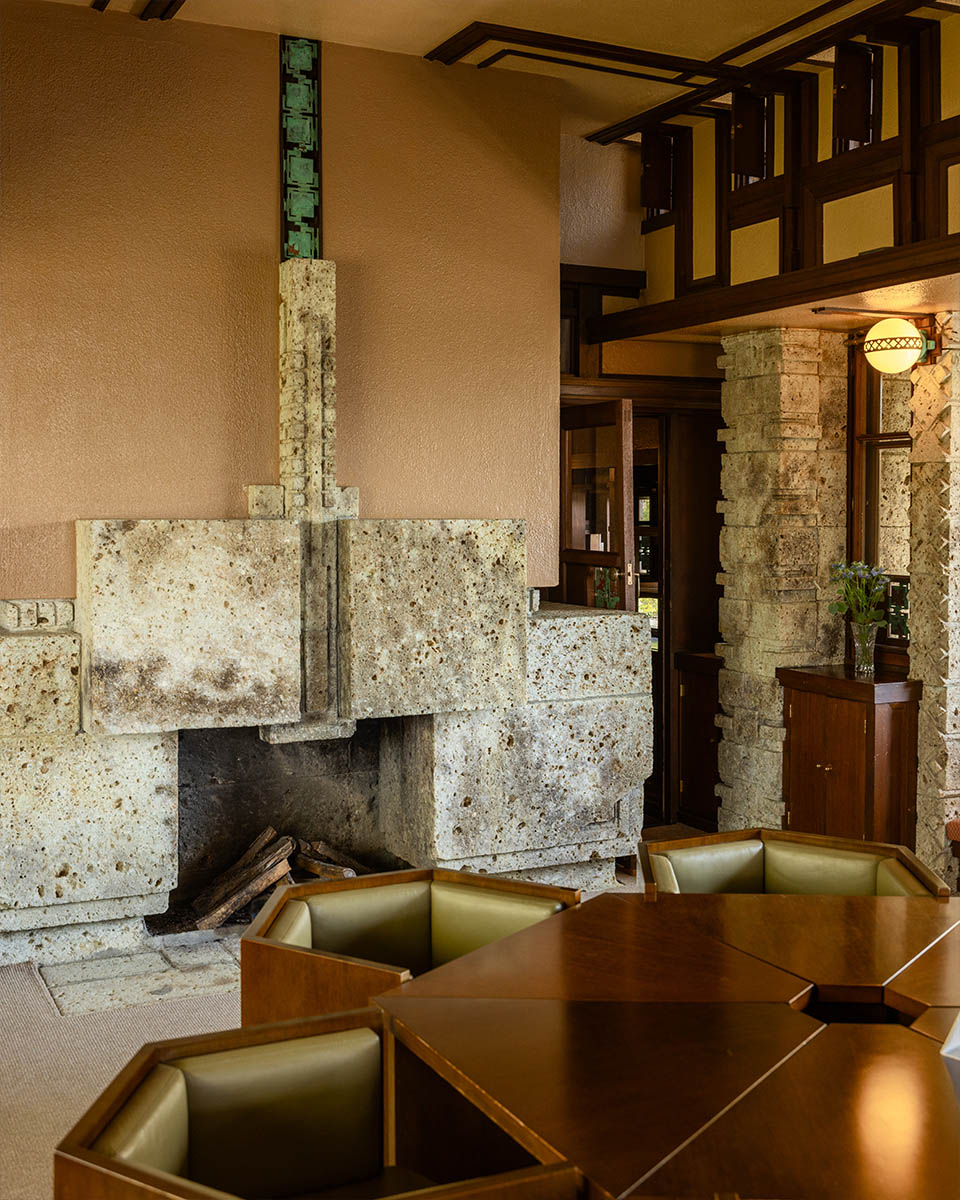
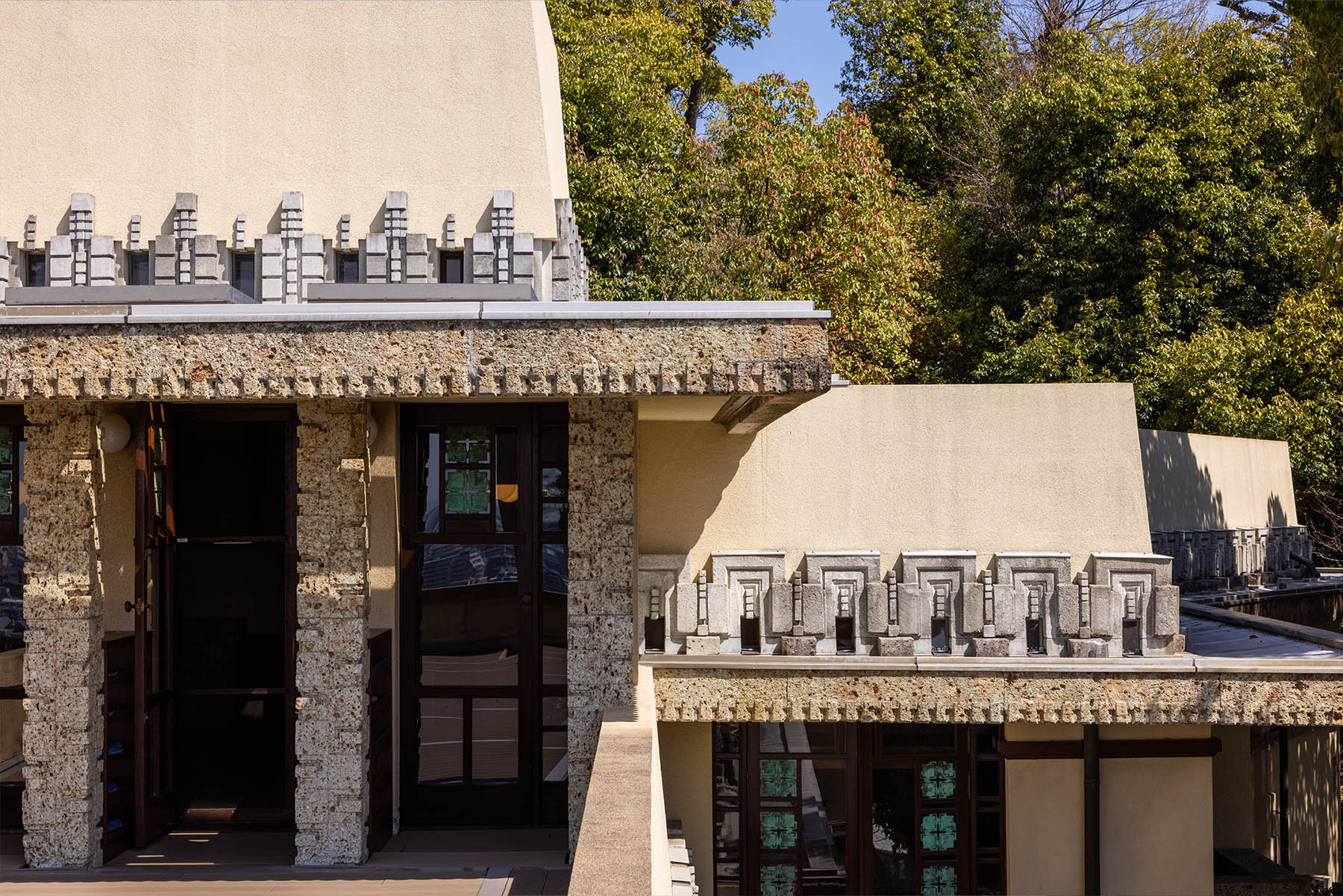
One of Frank Lloyd Wright’s most distinctive strengths was his ability to harmonize architecture with the natural environment—a principle fully expressed in the Yodokō Guest House which merges with sits gracefully on the sloped topology of the site. Clad in soft volcanic Oya stone sourced from Tochigi Prefecture, the four-level residence unfolds across broad, overhanging terraces that blend seamlessly into the hillside.
Towering camphor trees (Cinnamomum camphora), zelkova (Zelkova serrata) and Japanese black pines (Pinus thunbergii) envelope the residence, seamlessly merging it with its natural surrounds.
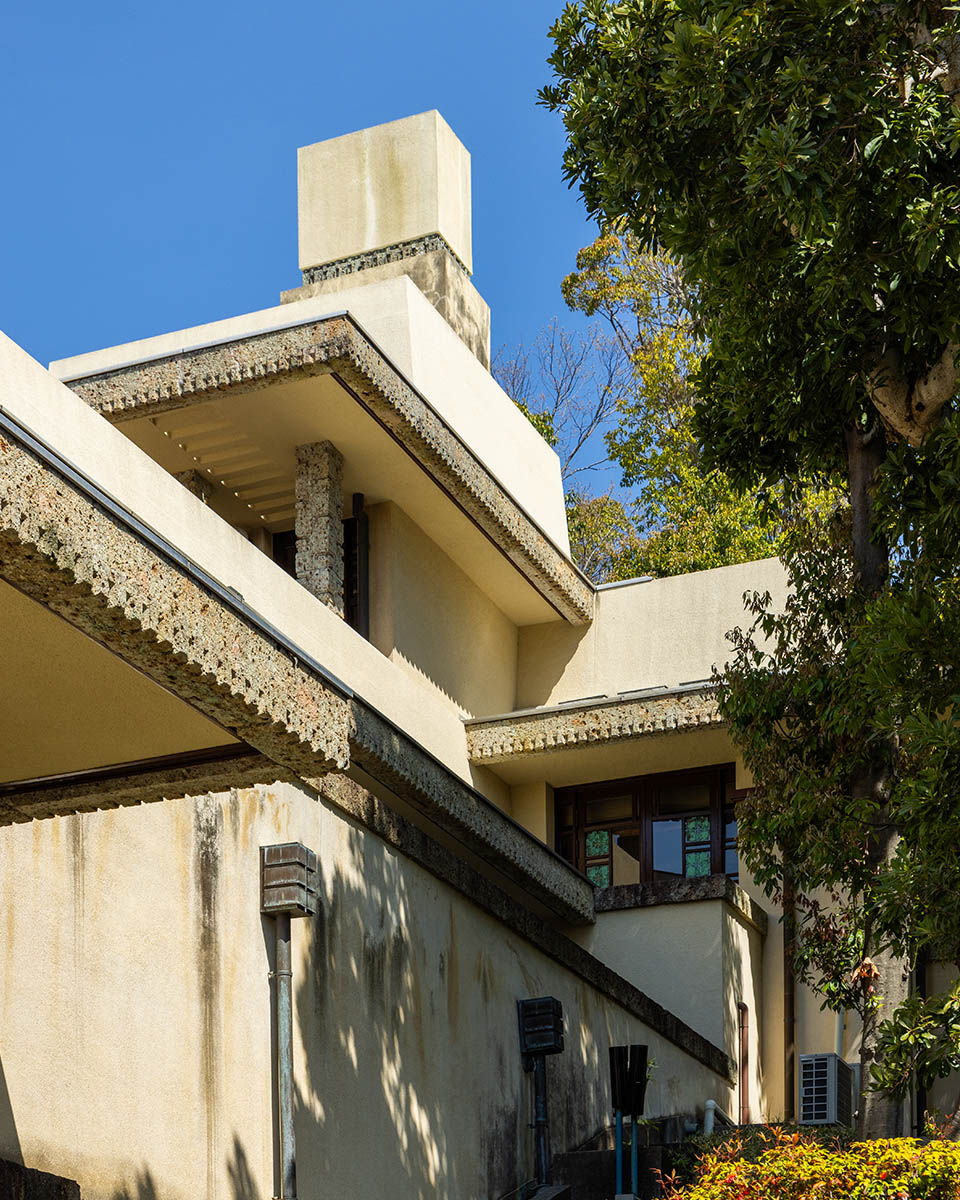
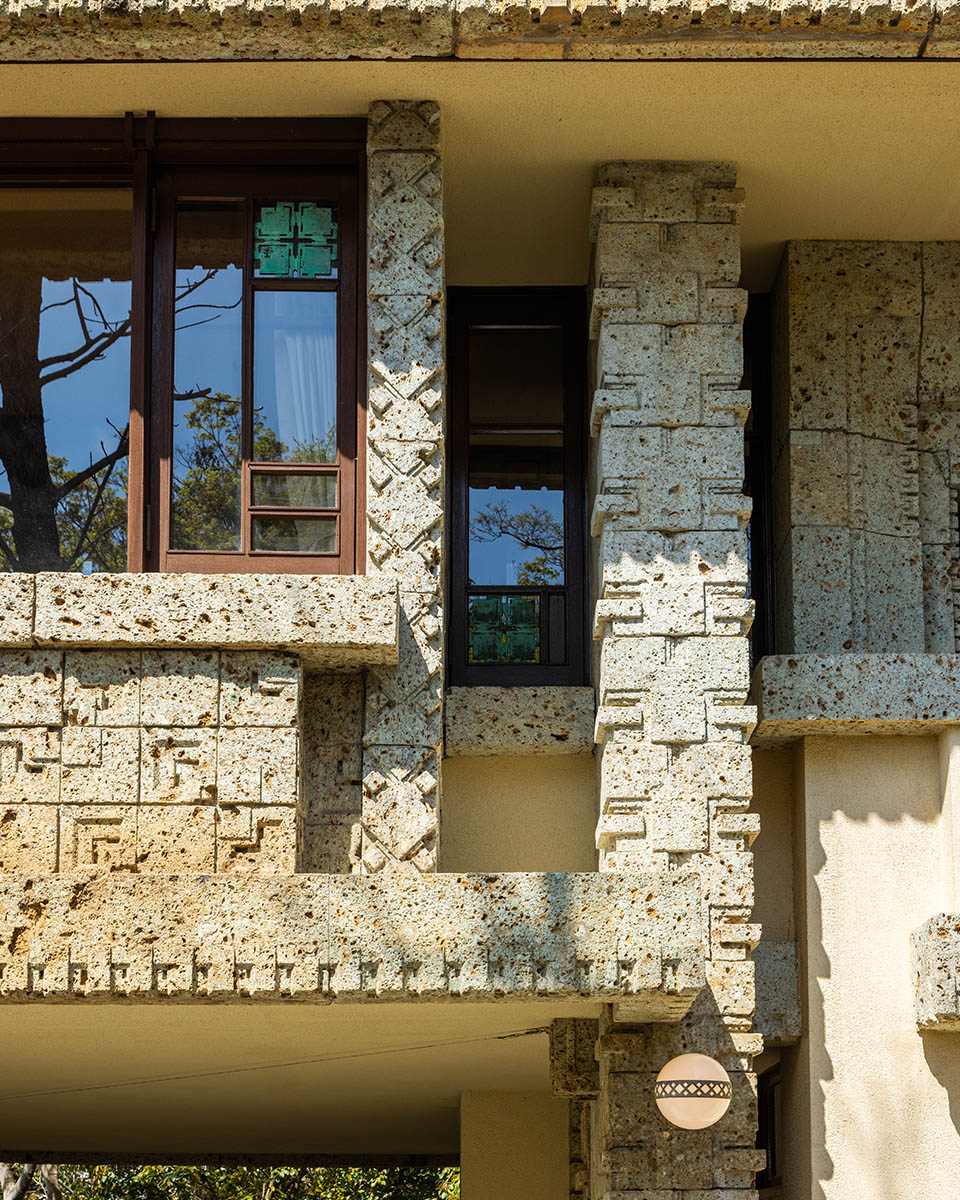
The crenellated geometric formations much resemble Wright’s American textile block houses such as the Ennis House whose motifs were Mesoamerican inspired.
A Geometric Design Language
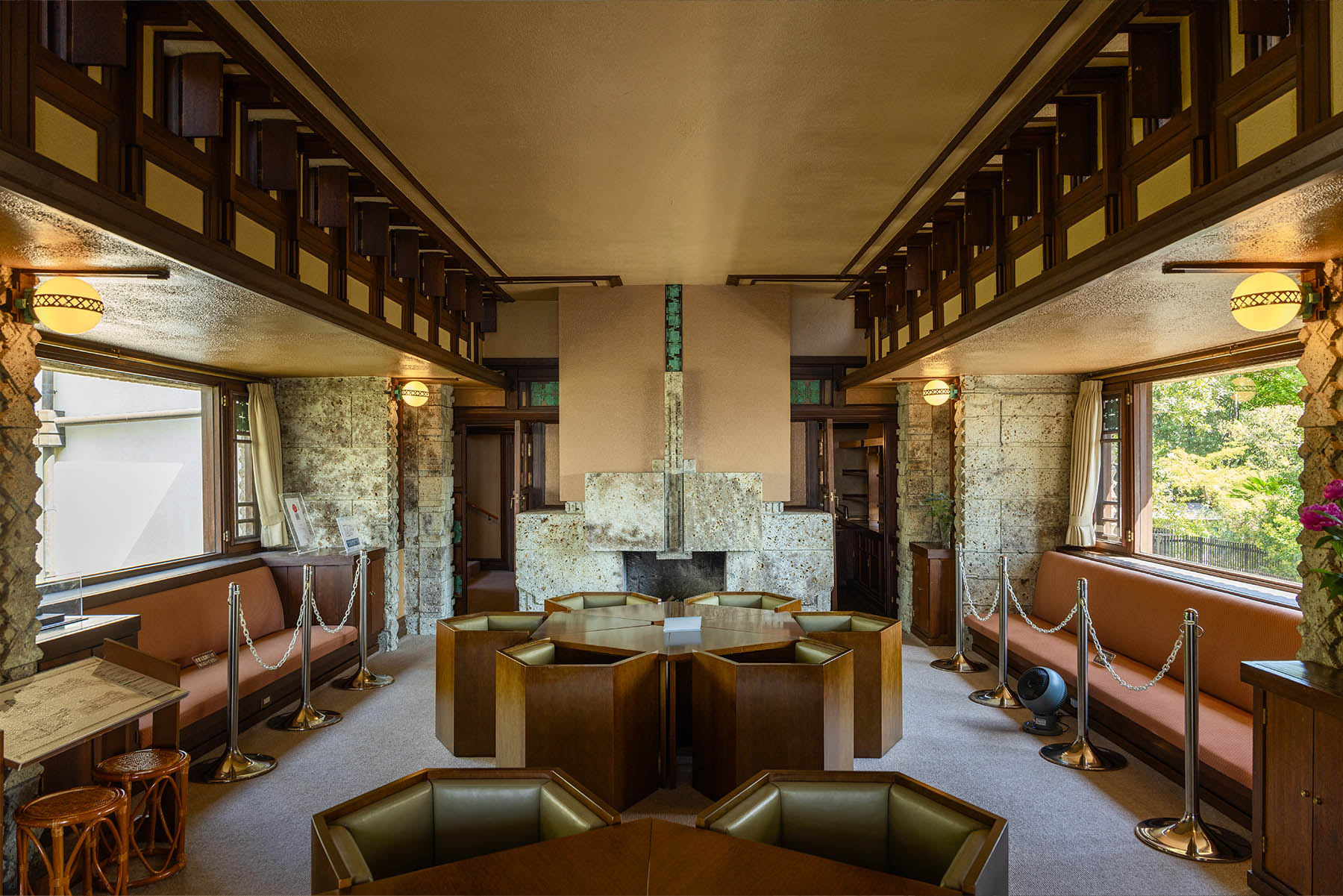
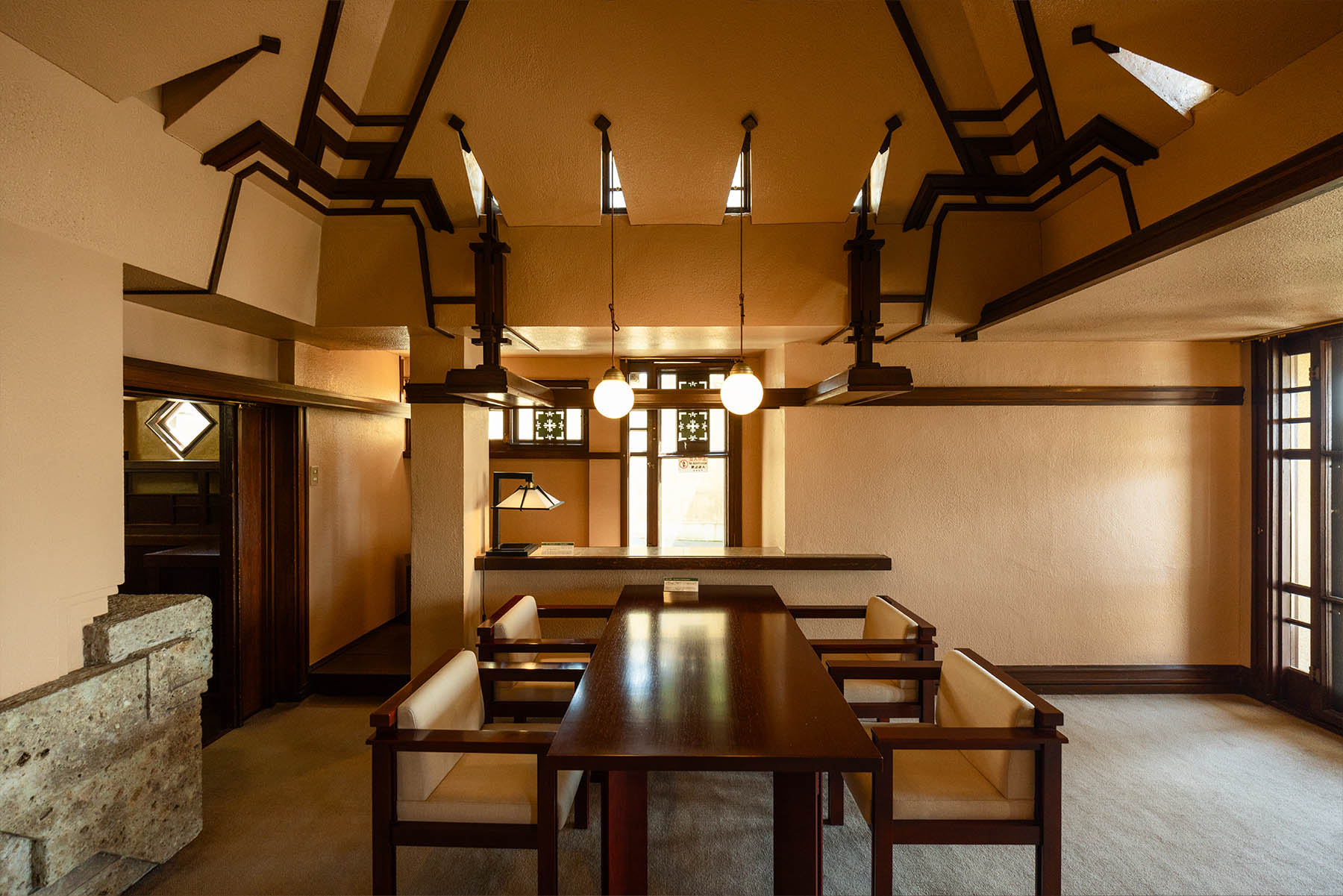
The interiors are detailed in true Wright fashion, with strong geometric motifs and bespoke Mahogony furniture. The design places emphasis on natural light and views to link indoors with outdoors – an intriguing detail are the rows of micro door-like windows along the ceiling.

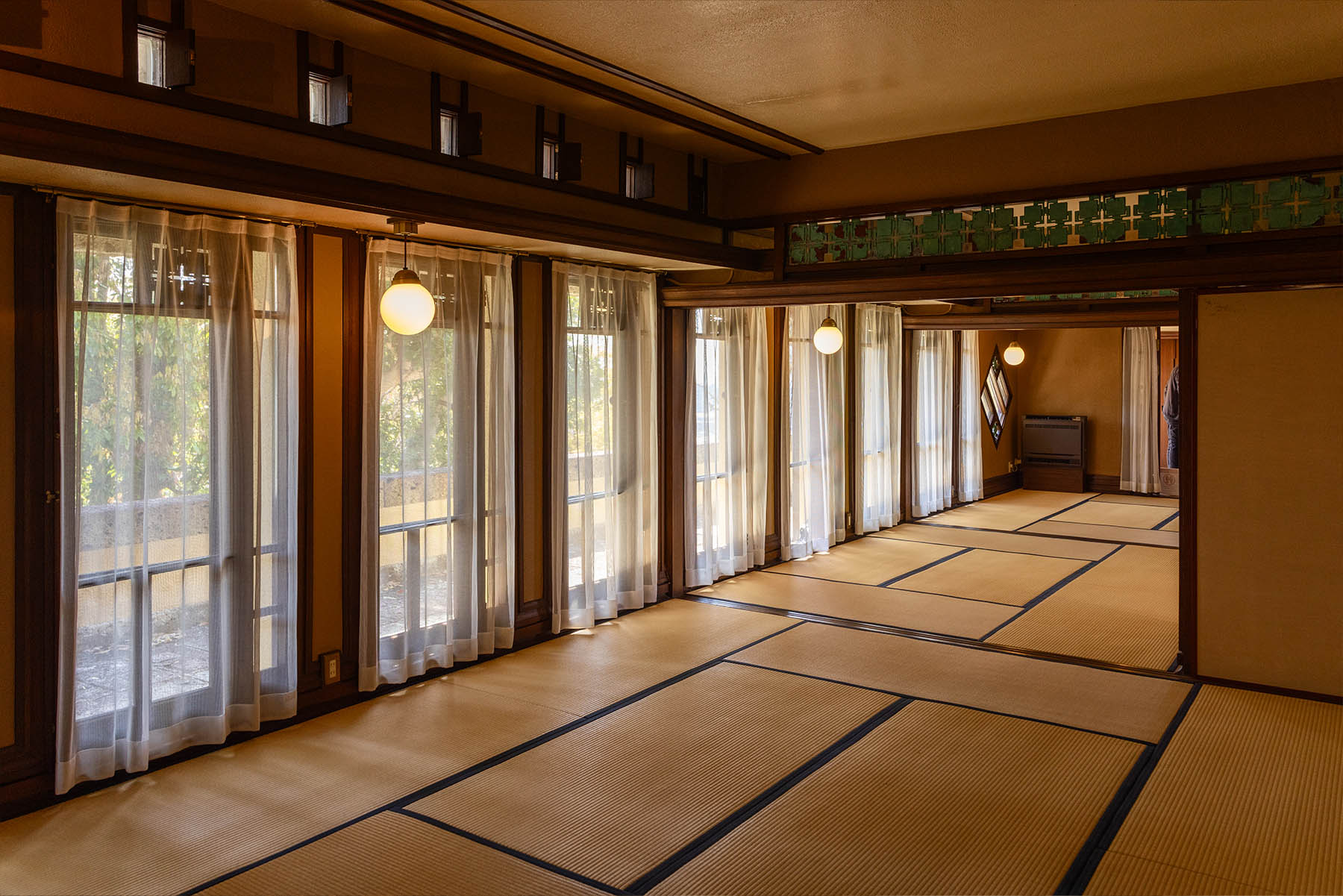
The Japanese-style room on the third floor was not included in Wright’s original design, but was converted to a Japanese-style room at the time of construction at Mr. Yamamura’s request. The construction of these tatami rooms was guided largely by Wright’s closest disciples, Arata Endo and Makoto Minami, who carefully balanced Japanese and Western design elements.
Ornate Copper Details
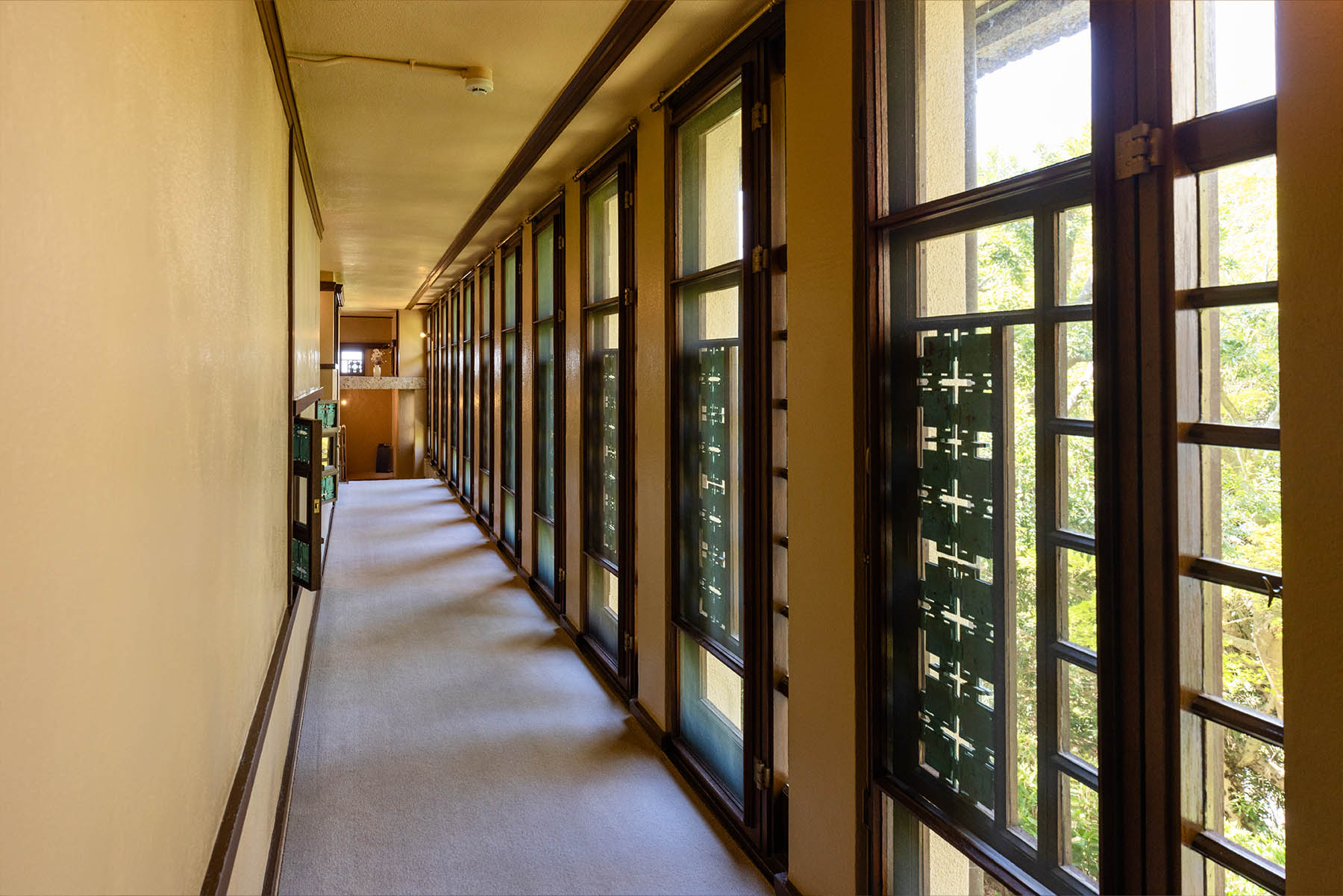
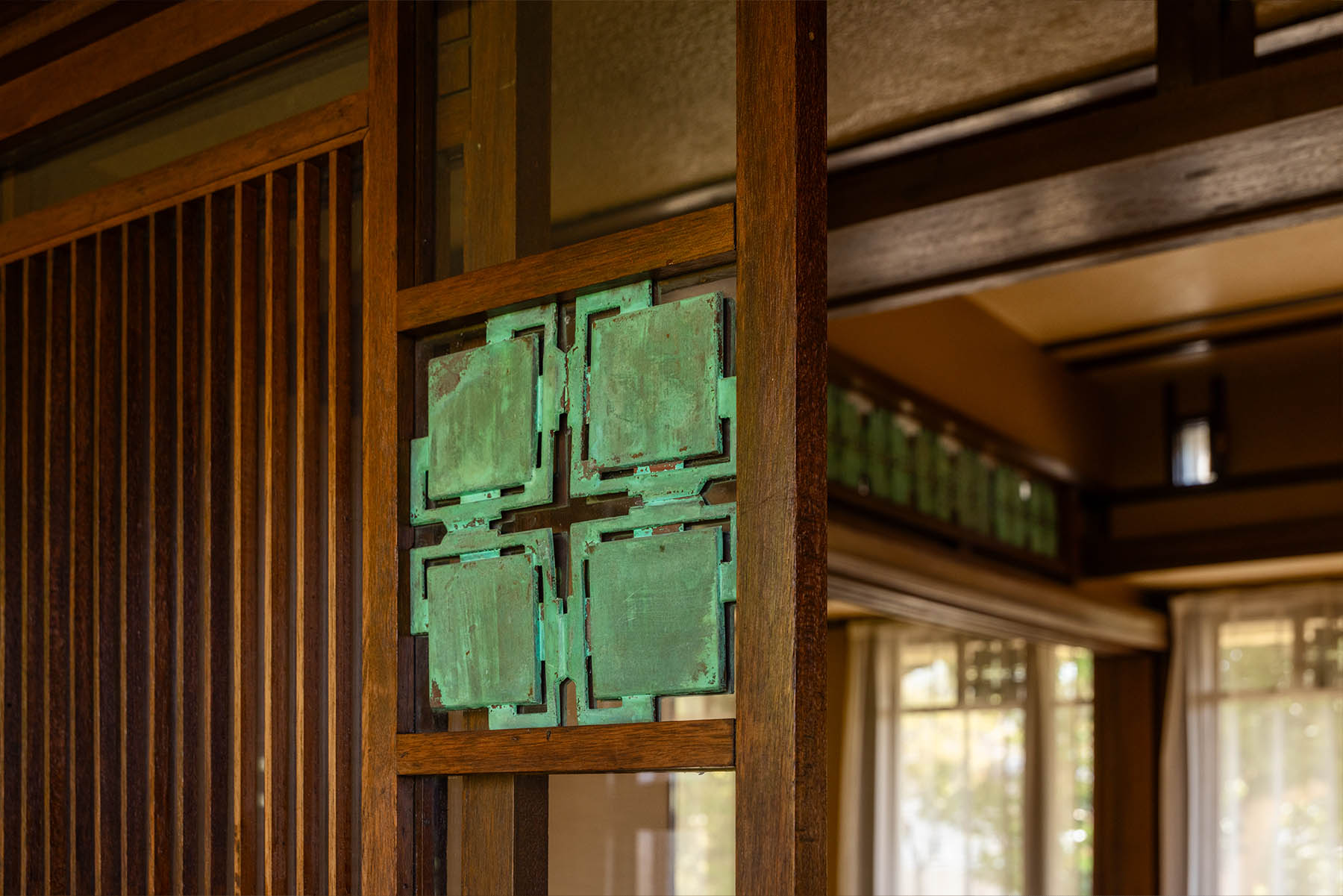
The windows are adorned with decorative copper plates shaped in the motif of plant leaves, a design that recurs on doors and transoms throughout the building. To replicate the natural color of foliage, the copper is treated with verdigris, a greenish patina that mimics the hue of aging leaves. As sunlight filters through these intricate panels, it casts dynamic patterns of light and shadow along the hallways, creating a striking visual effect that evokes the feeling of sunlight streaming through the branches of a tree.
After its completion in 1924, the Yamamura family occupied the house for only about a decade, with many events following in the proceeding years. In 1947, following World War II, ownership passed to Yodogawa Steel Works, Ltd., which used the residence as a home for the company president. During the 1960s, it was rented to American residents, and in the early 1970s, it served as company housing for employees.
The house was designated an Important Cultural Property in 1974, yet it took another fifteen years before a full restoration was completed and it was opened to the public. The residence suffered additional damage during the Great Hanshin-Awaji Earthquake of 1995 and has undergone two major closures for repairs and was remarkably restored to Wright’s original vision.
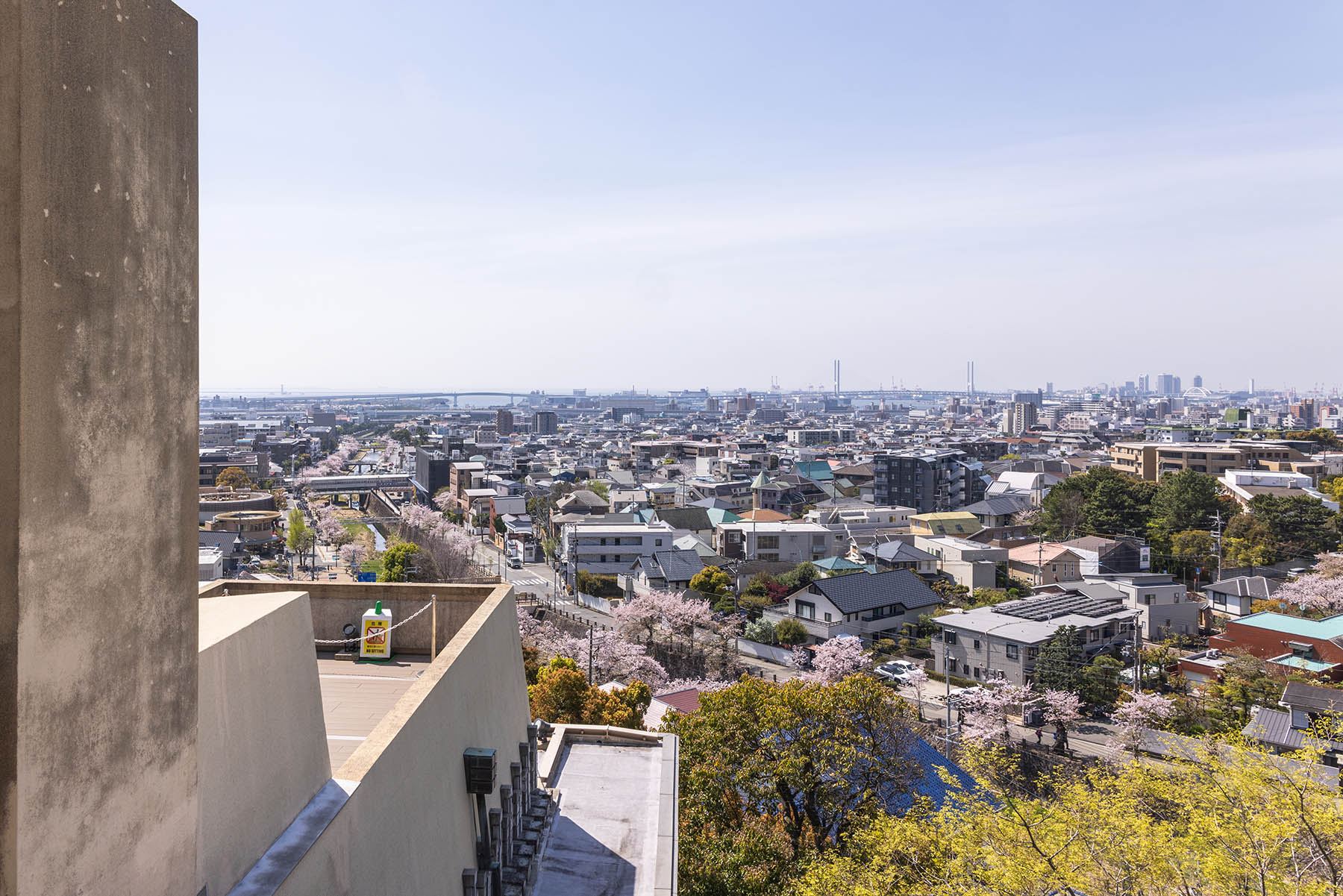
The rooftop offers stunning panoramic views over Ashiya City, with the sea of Osaka Bay in the distance.
Best Photography Spots
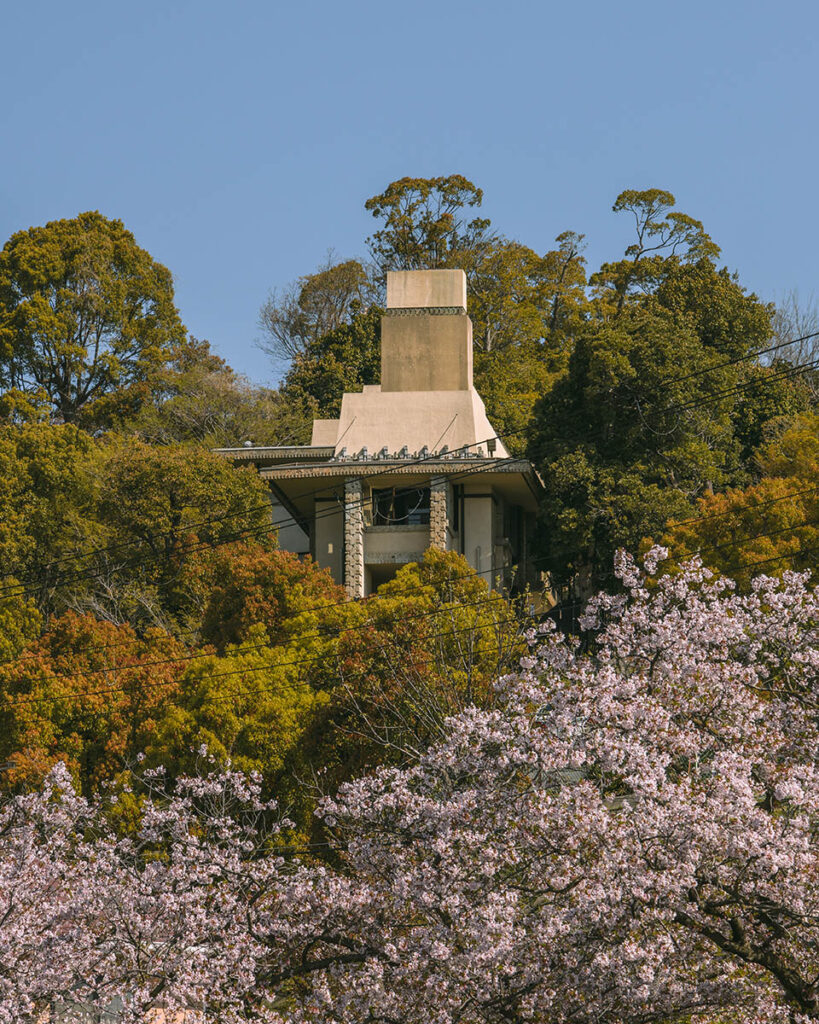
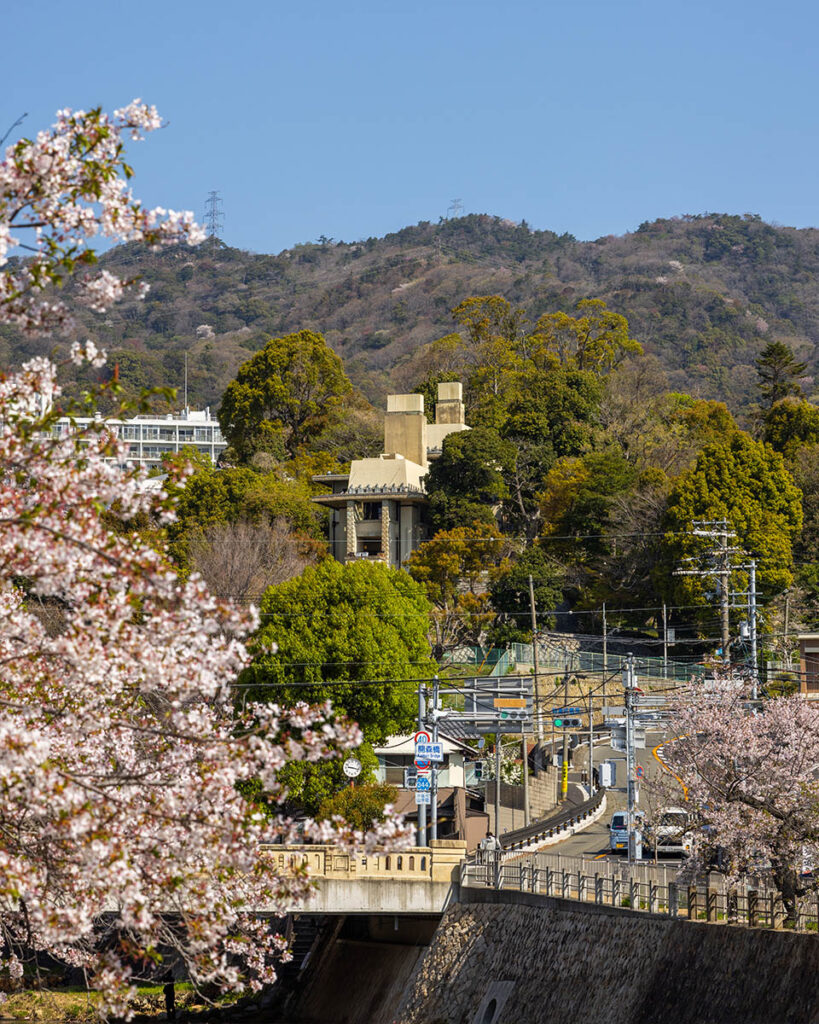
Sakura / Cherry blossoms line the Ashiya river during Spring which frame the building nicely and is best captured with a telephoto zoom lens.
Visiting the House
For opening hours refer to the official website at the following link.
At the time of writing the house is open:
Days: Wednesday, Saturday, Sunday, public holidays.
Hours: 10:00 – 16:00
Project Details
Completed: 1924
Architect: Frank Lloyd Wright
Photographs : © Finbarr Fallon (2025)