Architecture of the Gunma Music Centre: A Landmark of Modernism by Antonin Raymond
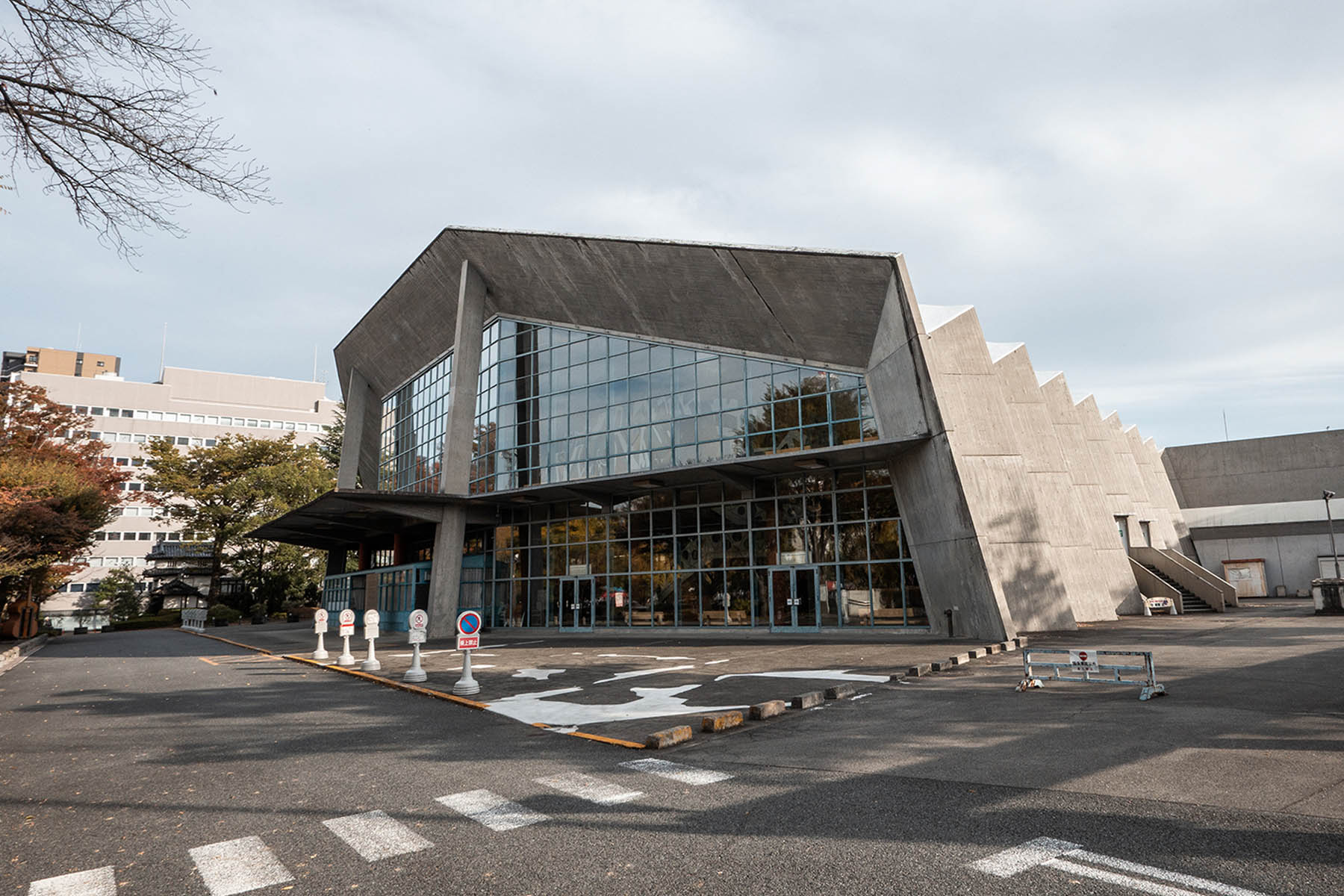
The Gunma Music Centre — located in Gunma, Takasaki — stands as one of the most iconic examples of post-war Japanese modernism. Designed by noted American-Czech architect Antonin Raymond, the building was completed in 1961 as Gunma Prefecture’s primary cultural venue. It also became the home of the Gunma Prefectural Symphony Orchestra, one of the oldest and most respected orchestras in Japan.
Folded Concrete Expression
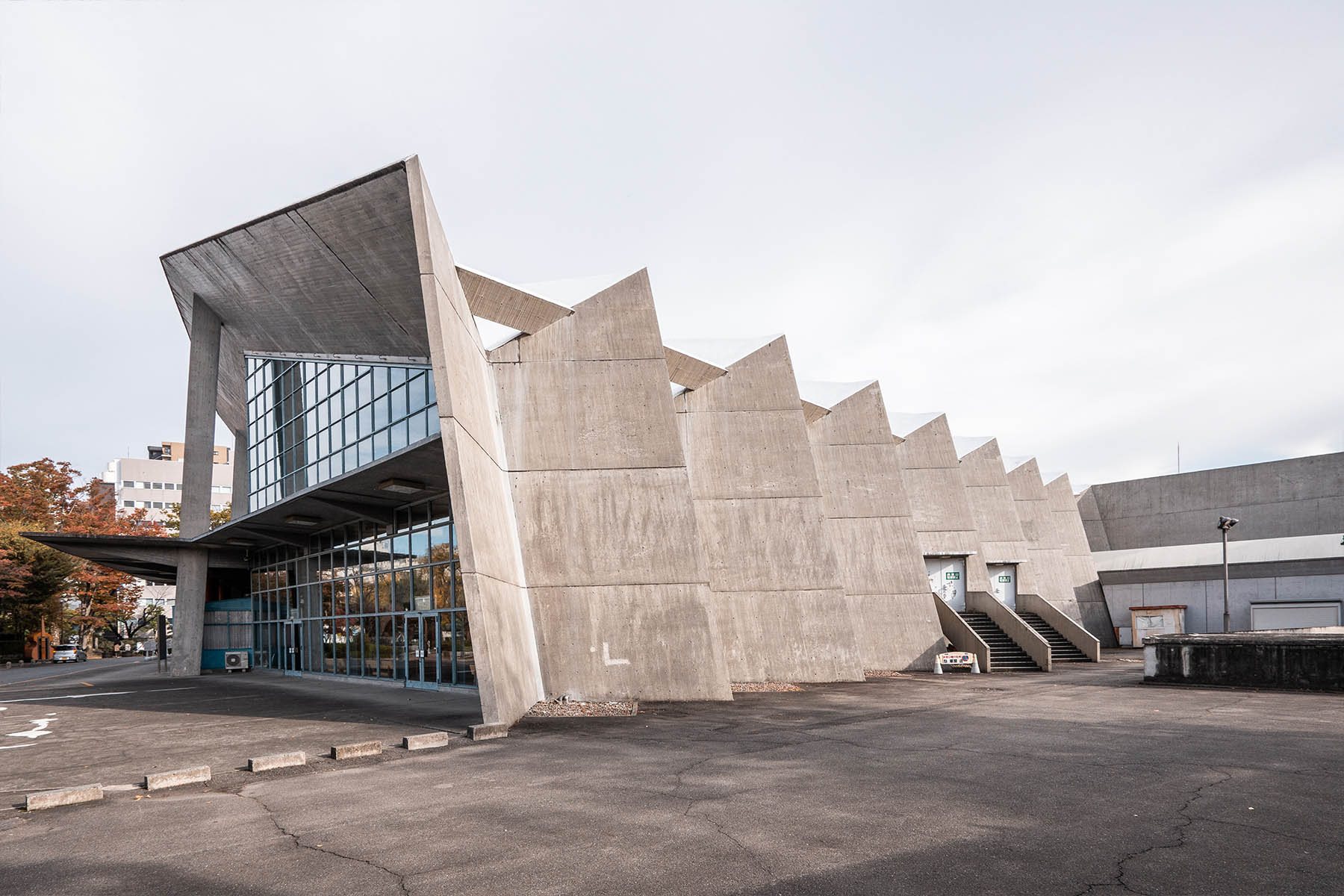
The design uses a series of folded concrete plates for the walls and roof that span over 60m, whilst providing seismic resistance through the inherent stiffness of their folded profile. Its engineering allowed vast interior spans without relying on heavy columns, enabling an uninterrupted performance space inside.
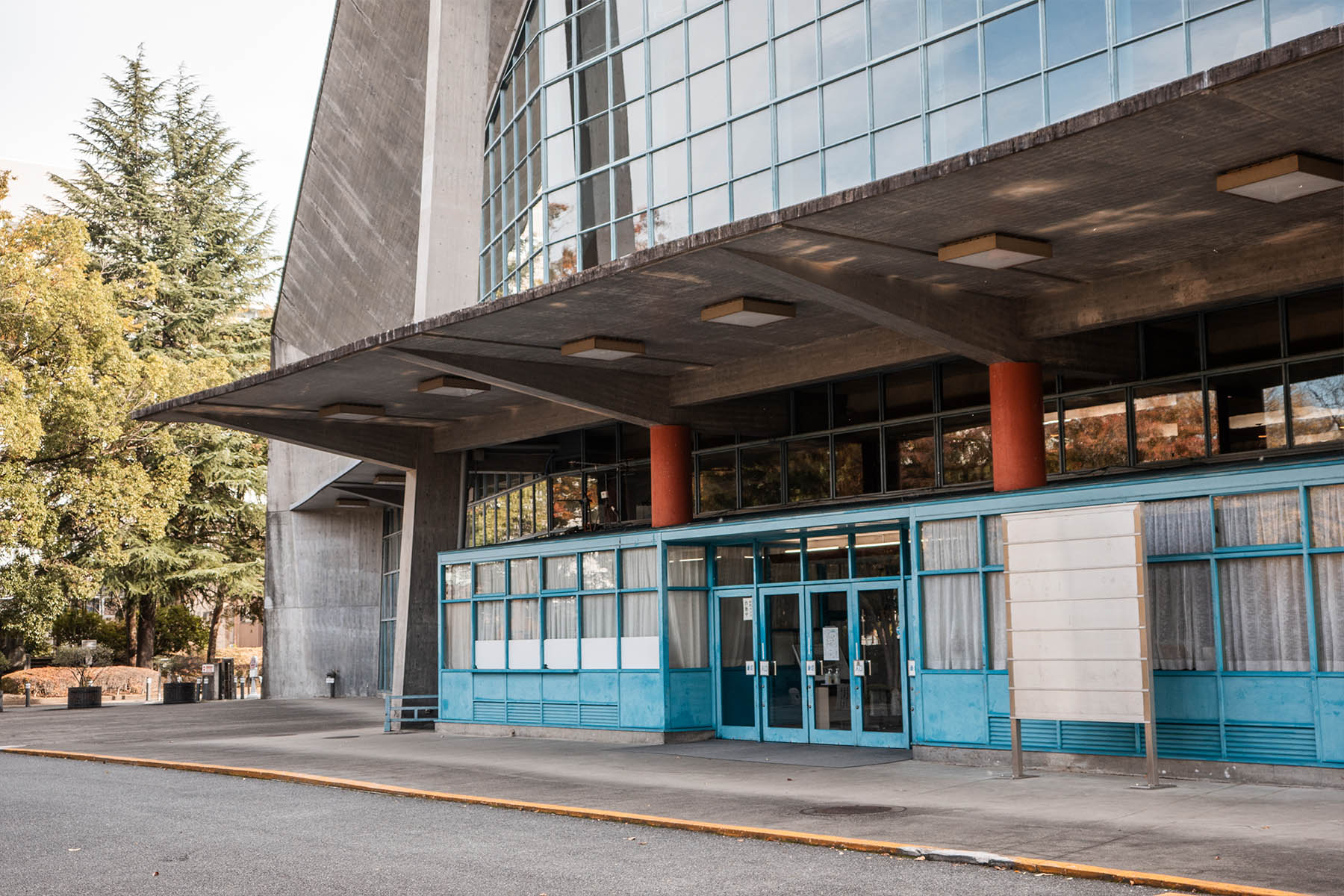
When we arrived at the site the building looked closed, despite showing as being open on Google Maps. The lobby lights were off and there were barriers inside sealing off the areas to the sides of the entrance. Tentatively we opened the door and saw a small office at the back with one light on. A gentleman was inside and we asked if we could take a look around. Expecting to be turned away, to our shock he said ok and turned the lights on for us and said we could roam around, except for the auditorium.
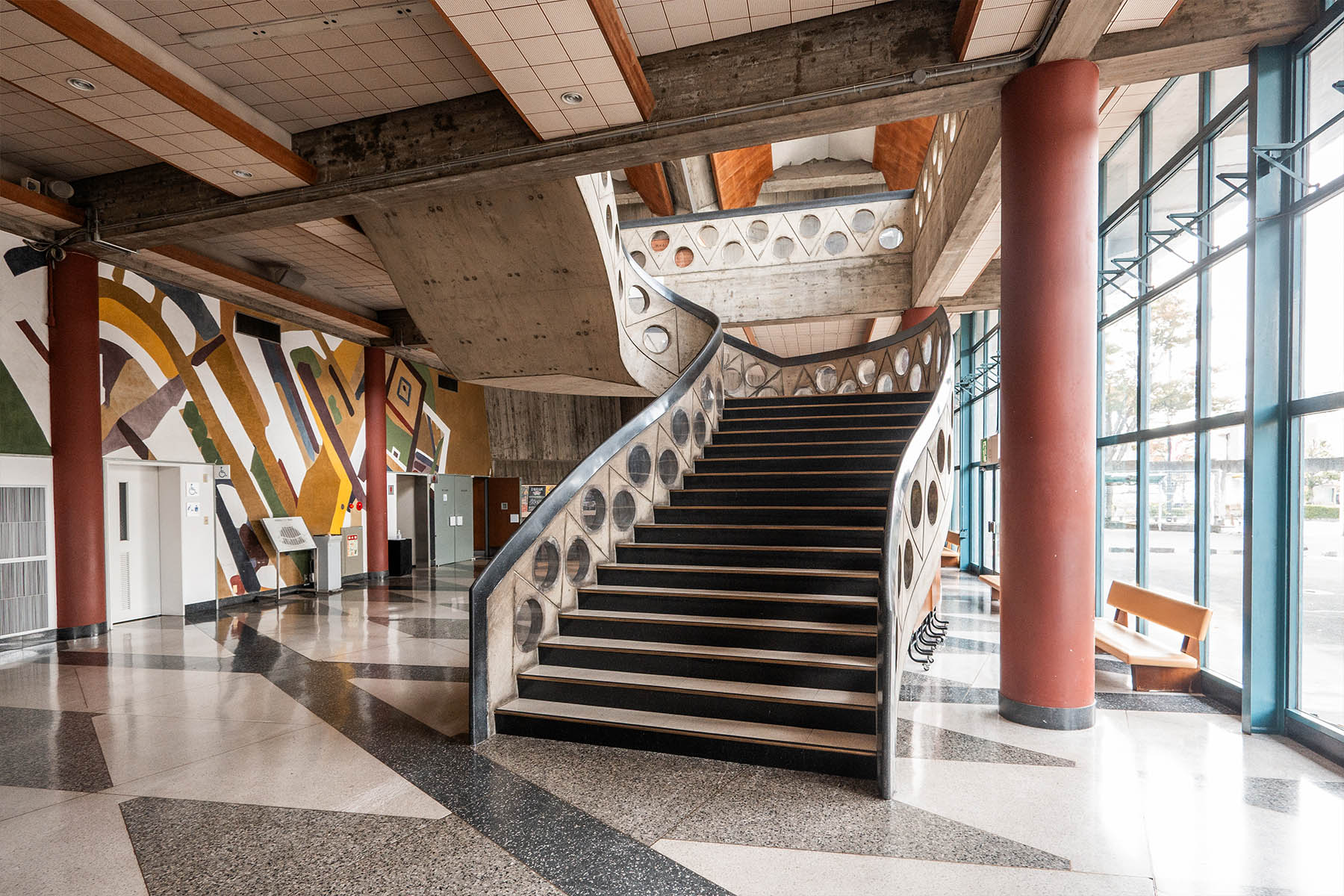
A Playful Interior
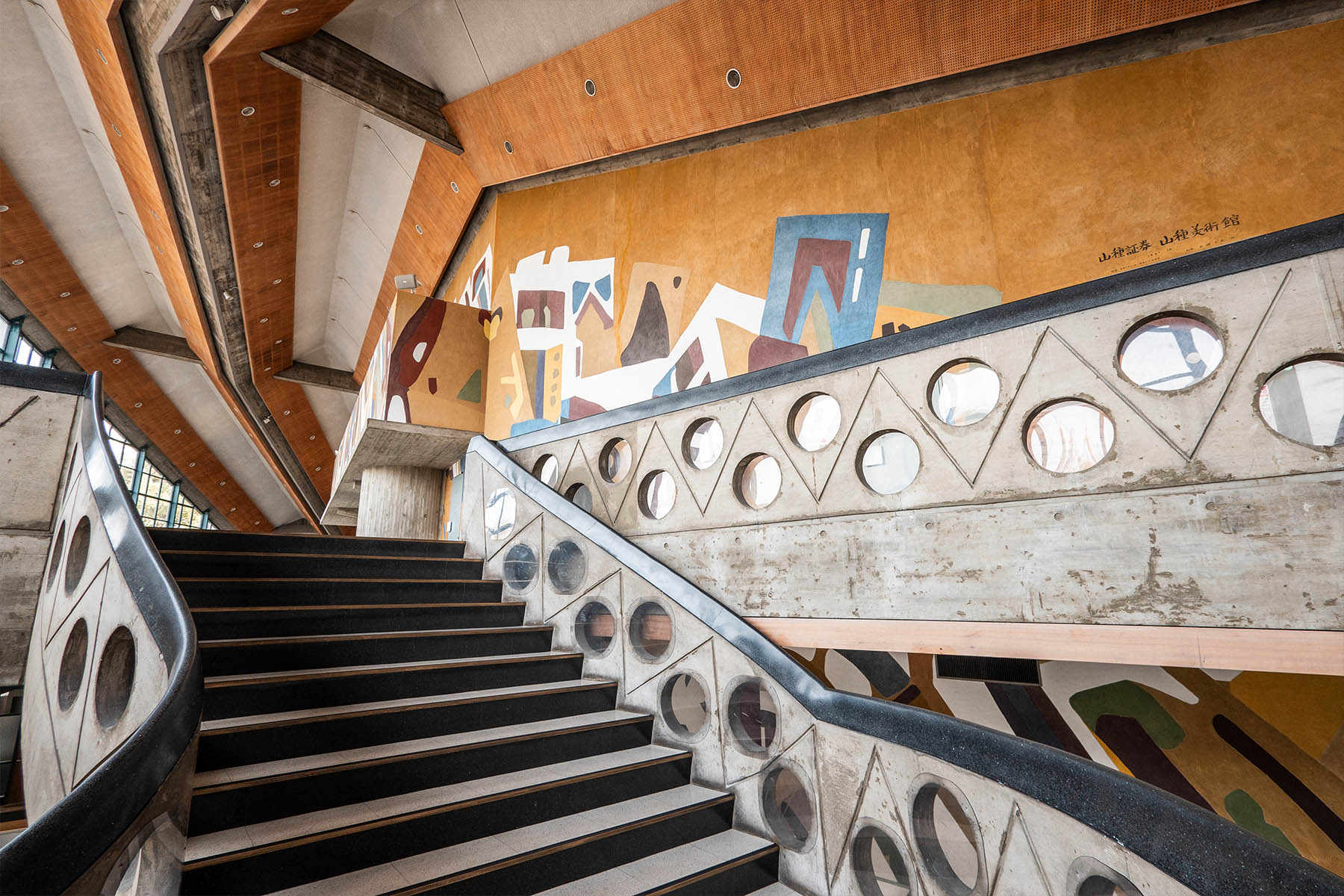
The interiors are playful, with bold murals and two large concrete staircase rising to each side of the main entrance, adorned with circular punched balustrades. Arriving at the second level the space opens into a triple height atrium which is beautifully lit by a large glass curtain wall.
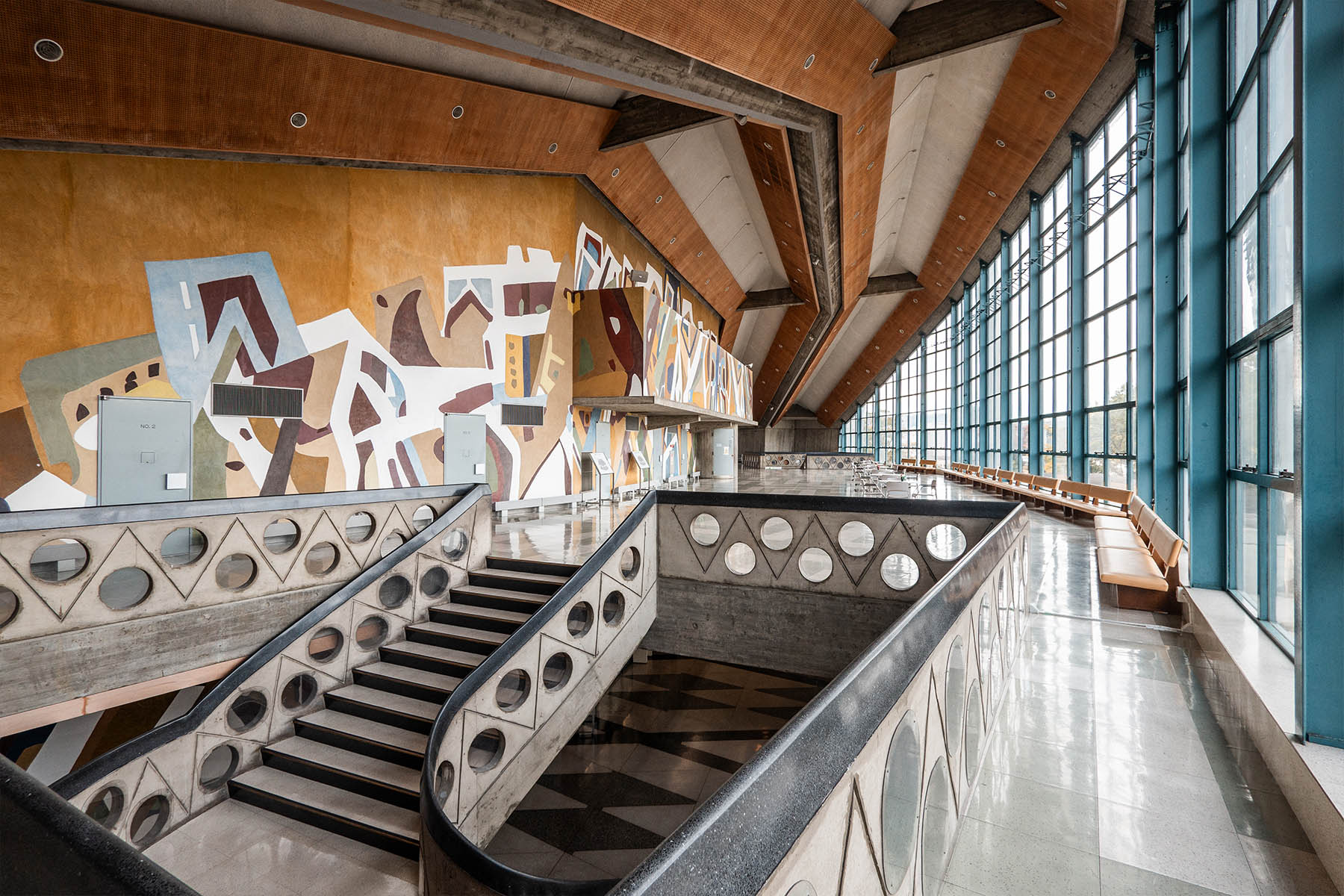
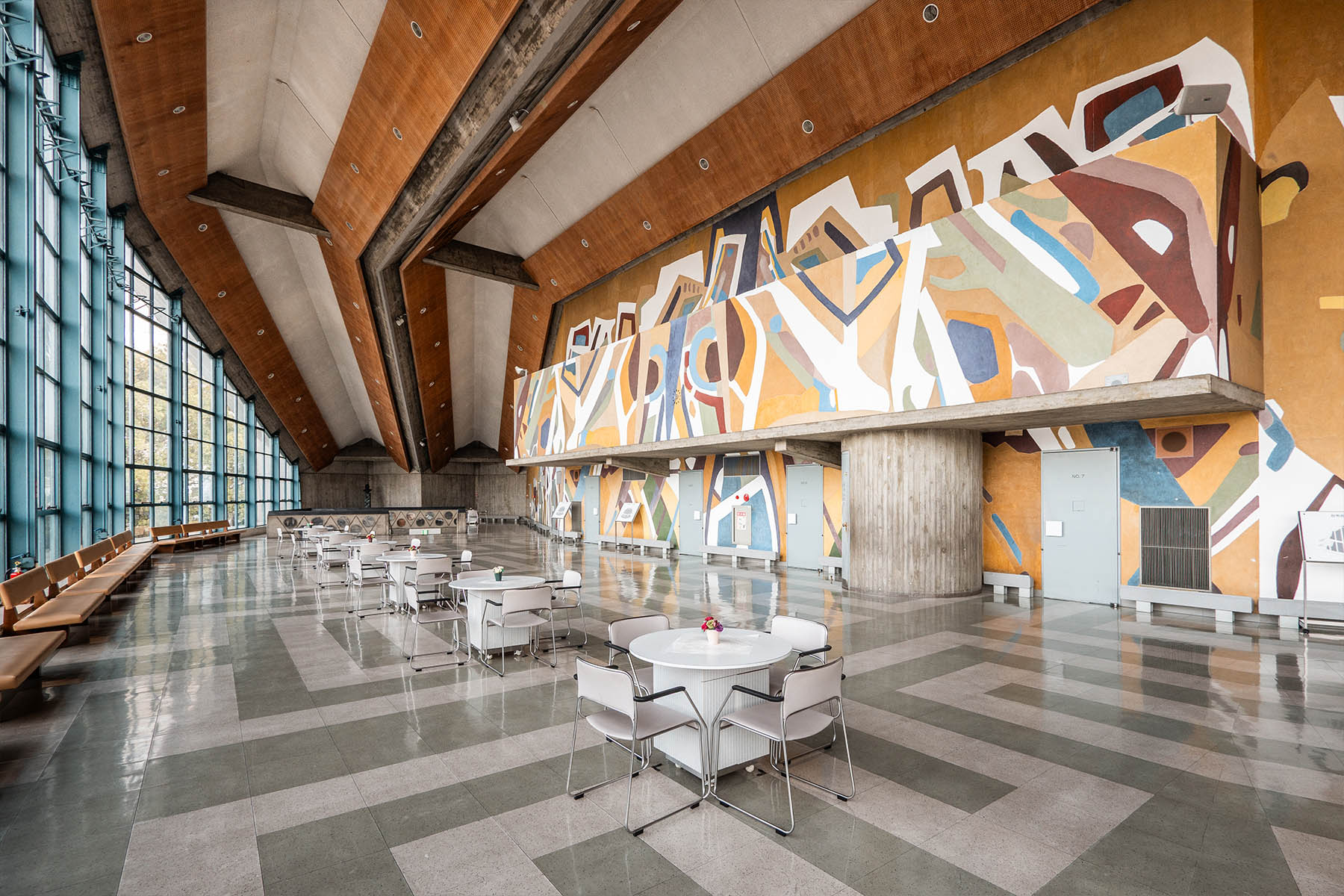
The huge frescoe on this level is titled “Rhythm” and based on an original painting by Raymond himself.
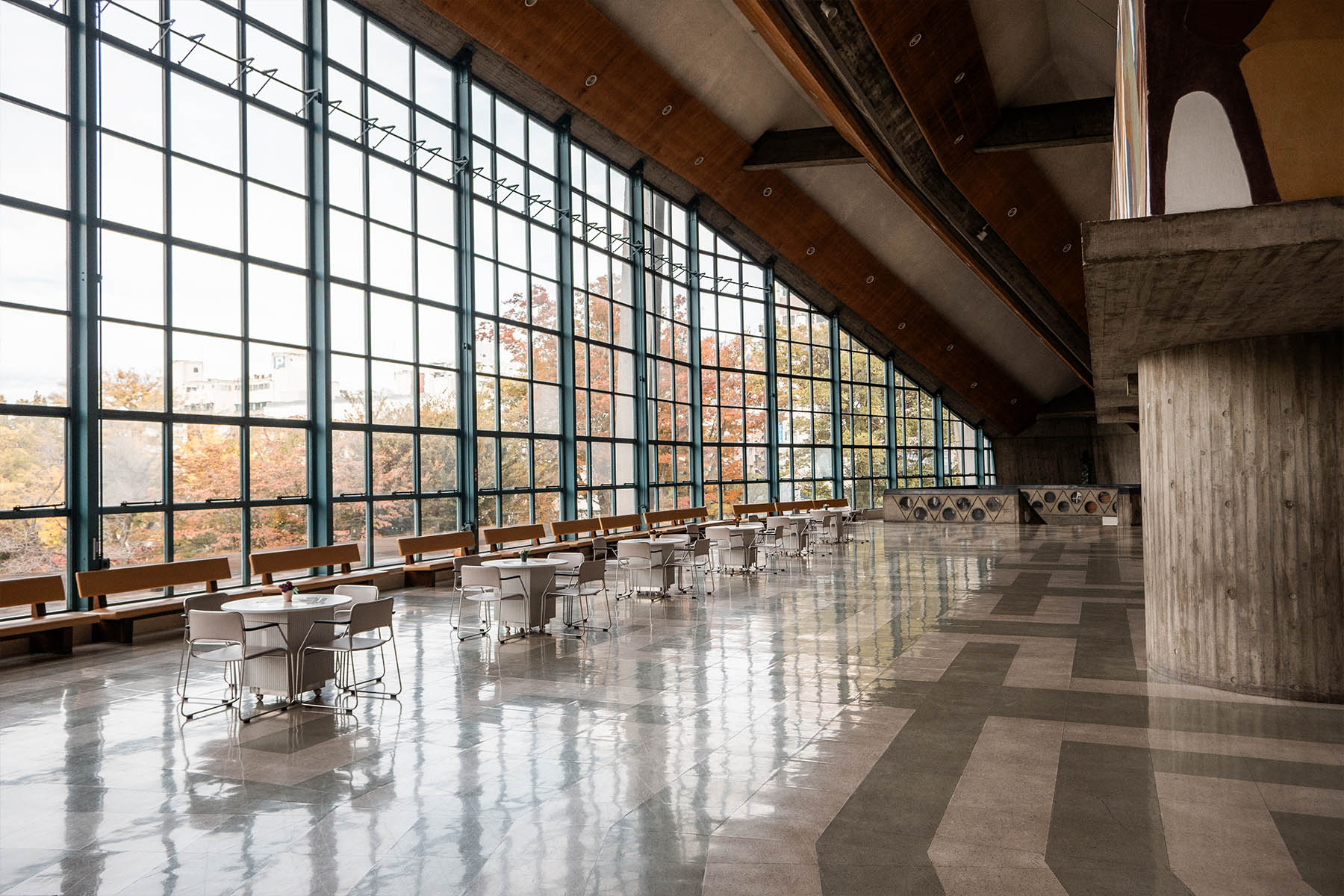
The Music Center was constructed almost entirely with donations from citizens and the center has been very popular among locals since its construction. It was selected by DoCoMoMo (an international organization working to conserve and document modern architecture) in 2000 as one of 20 nostalgic Japanese buildings in the modern style.
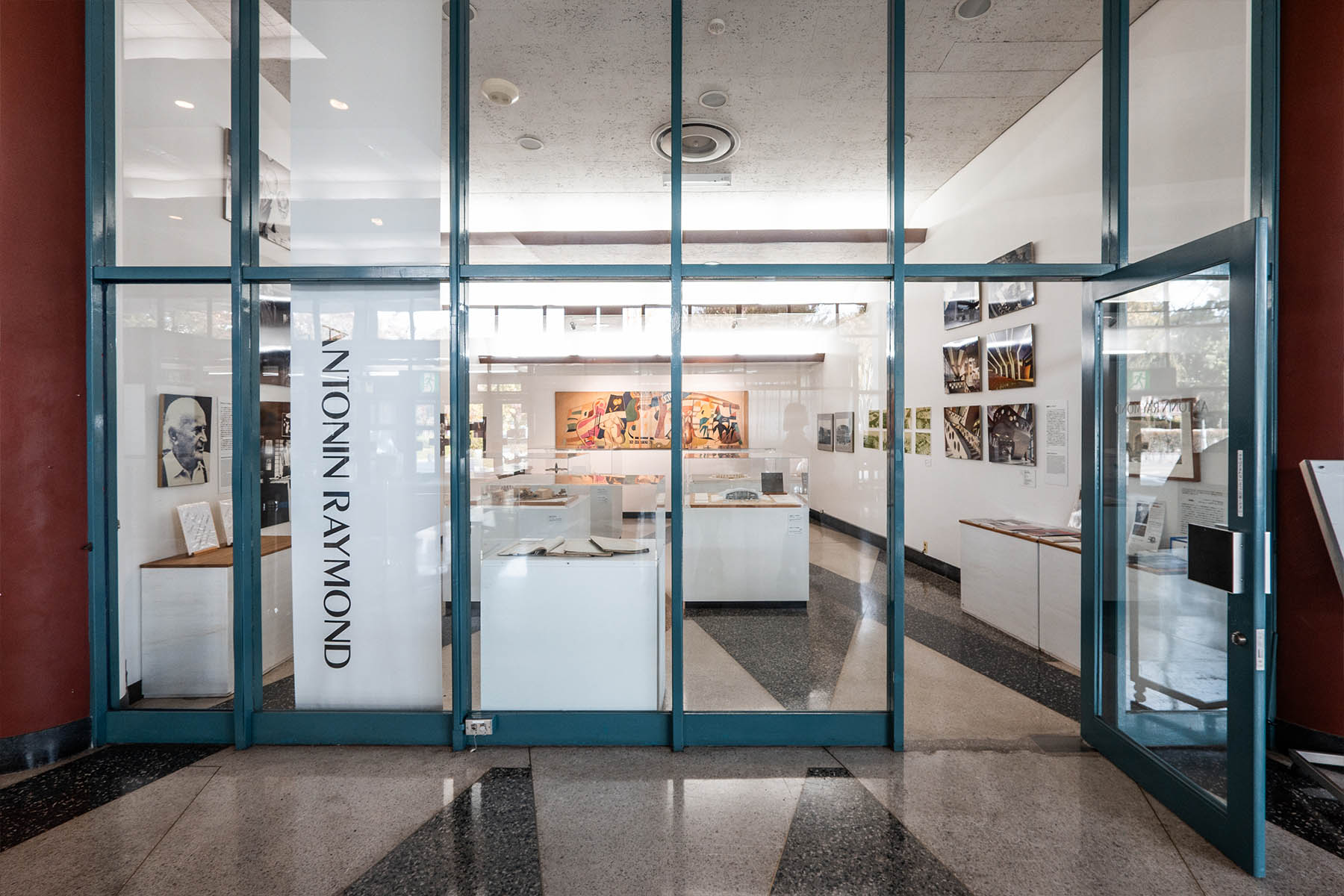
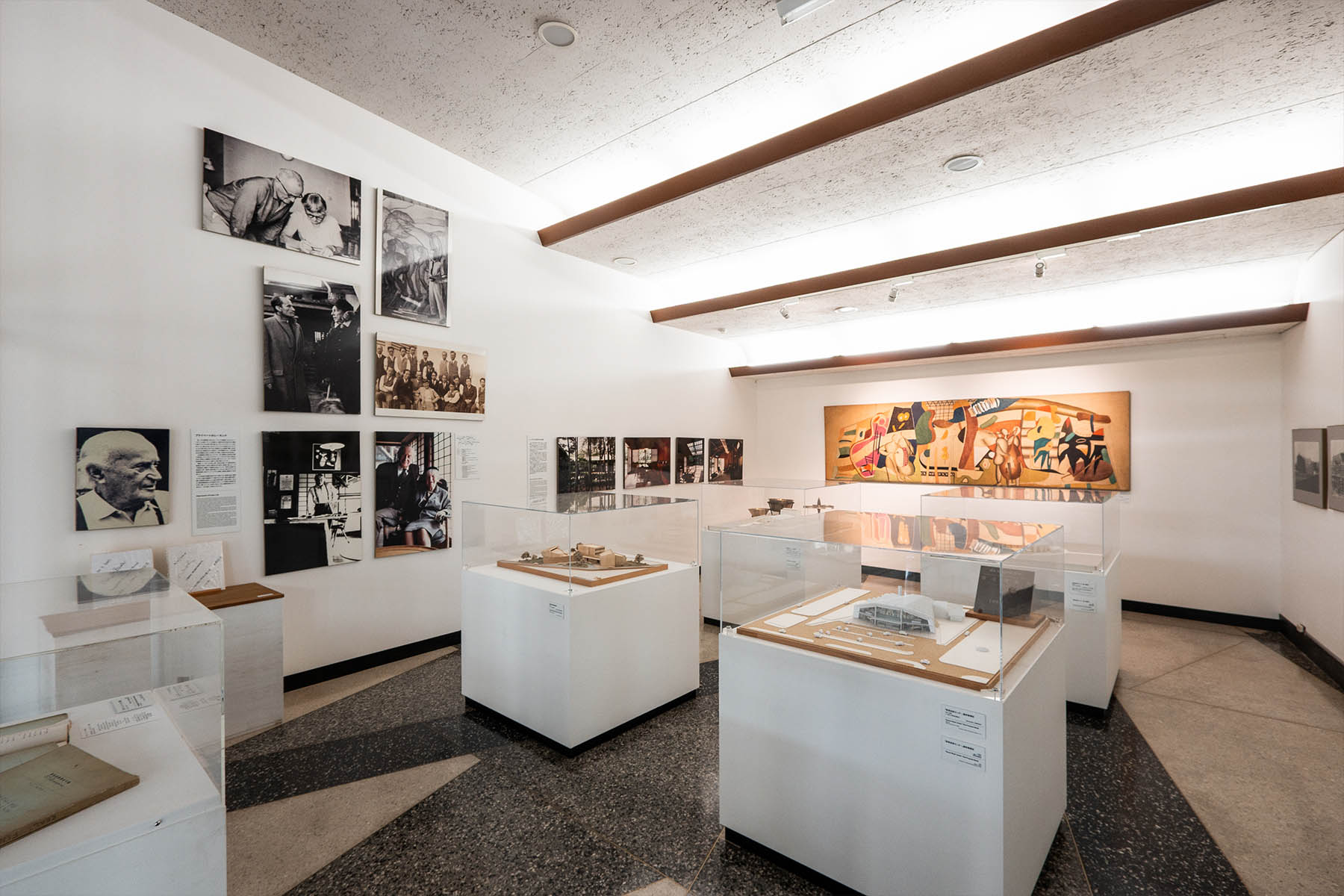
To our surprise there was also a small gallery on the work of Anonin Raymond here, with various scale models, books and archival images. Antonin and his wife Noémi Raymond accompanied Frank Lloyd Wright to Tokyo in 1919 to work on the infamous Imperial Hotel, and settled in Japan following its completion. Except for the war years, they made their home in Tokyo for over four decades, fusing Japanese traditional architecture with contemporary design.
The Raymonds created more than 400 designs and greatly impacted modern Japanese architecture through their own work and that of such significant figures as Junzo Yoshimura and Kunio Maekawa, whom they employed.
Visiting Gunma Music Centre
The project is located a short 15 minute walk from JR Takasai Station.
Project Details
Completed: 1961
Architect: Antonin Raymond
Photographs : © Finbarr Fallon (2025)