
An Architectural Concept That Rejects Traditional Functionality
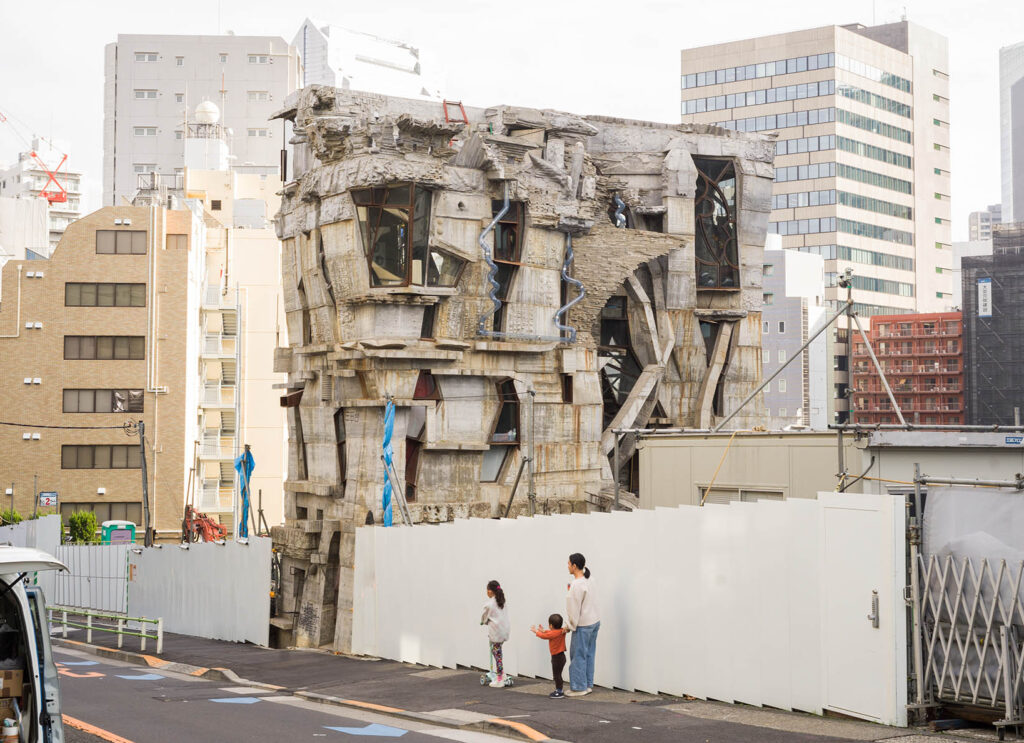
Tokyo is a city celebrated for its efficiency, density, and architectural precision — a place where nearly every building is designed with maximum practicality in mind. Yet tucked into the heart of the capital’s Chiyoda district is an unusual architectural experiment: Kioi Seido. A five-storey structure commissioned by the RINRI Institute of Ethics, a private social education organization that wanted a building conceived without a predetermined function. (The structure is widely known as the “building with no purpose”)
Hiroshi Naito: Architect
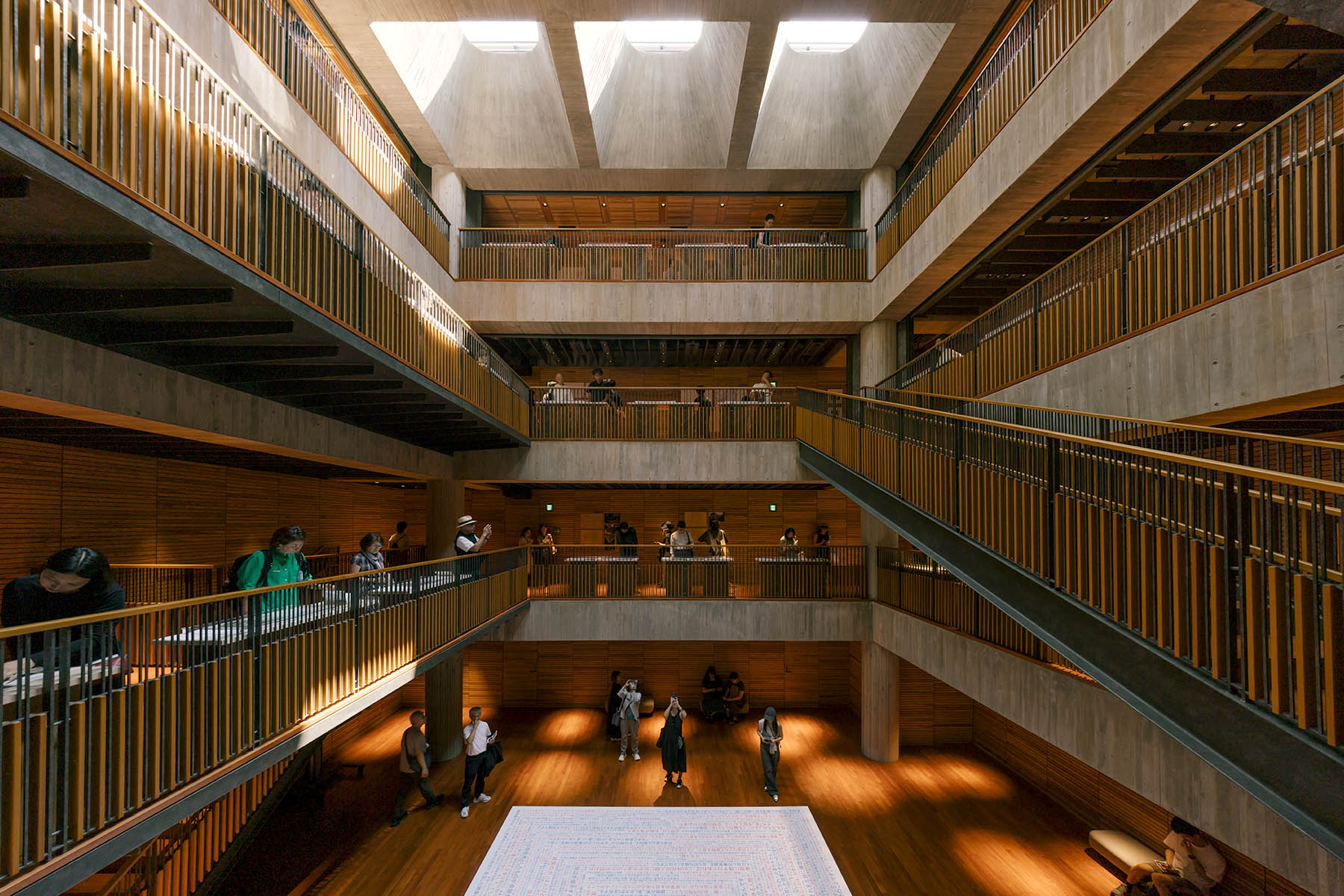
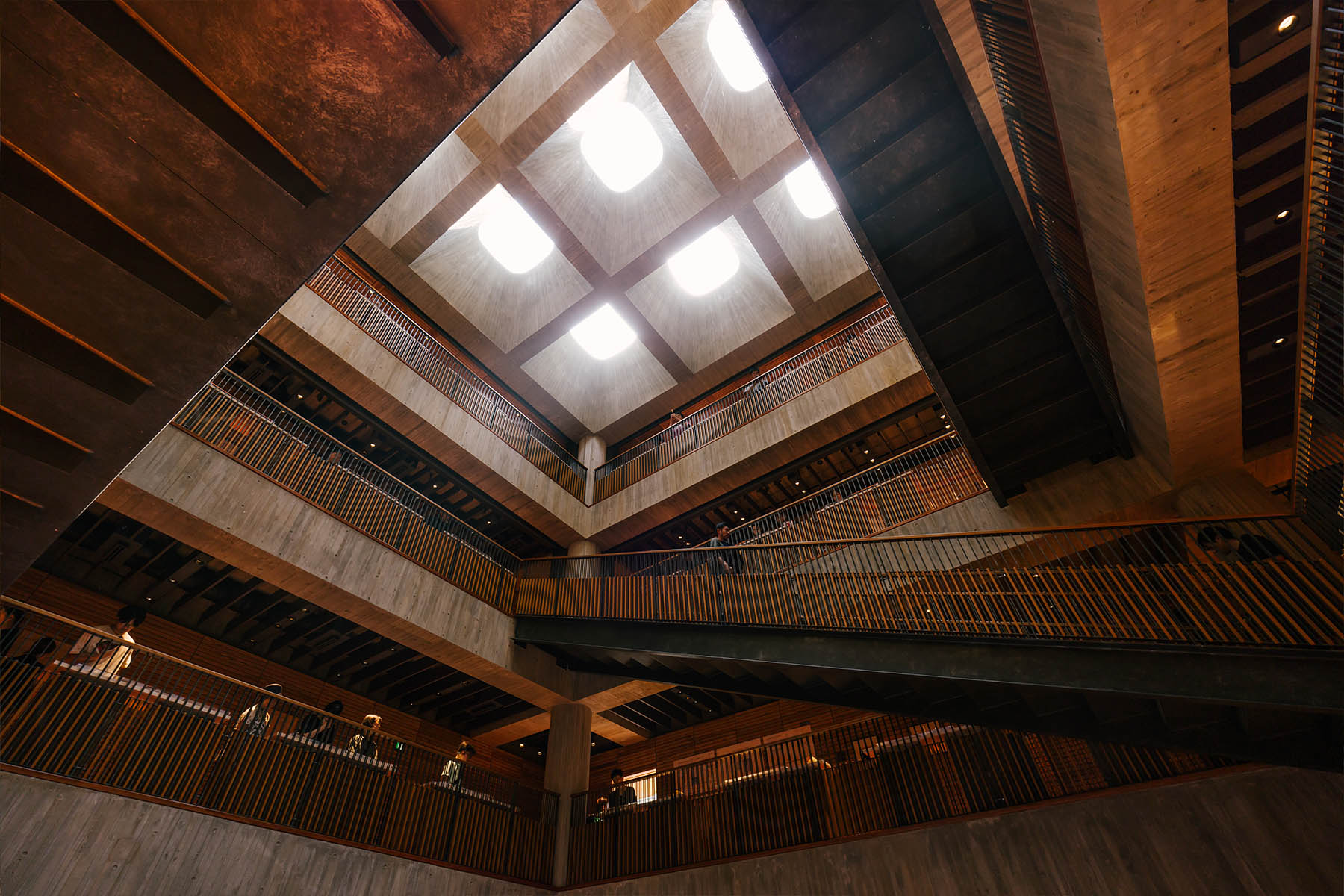
The project was entrusted to architect Hiroshi Naito, who was given the rare freedom to design without conventional purpose, resulting in a striking structure that celebrates atmosphere, materiality, and light rather than programmatic utility. We had the rare opportunity to visit the site in 2025 to coincide with an exhibition of Naito’s works which filled the main atrium space.
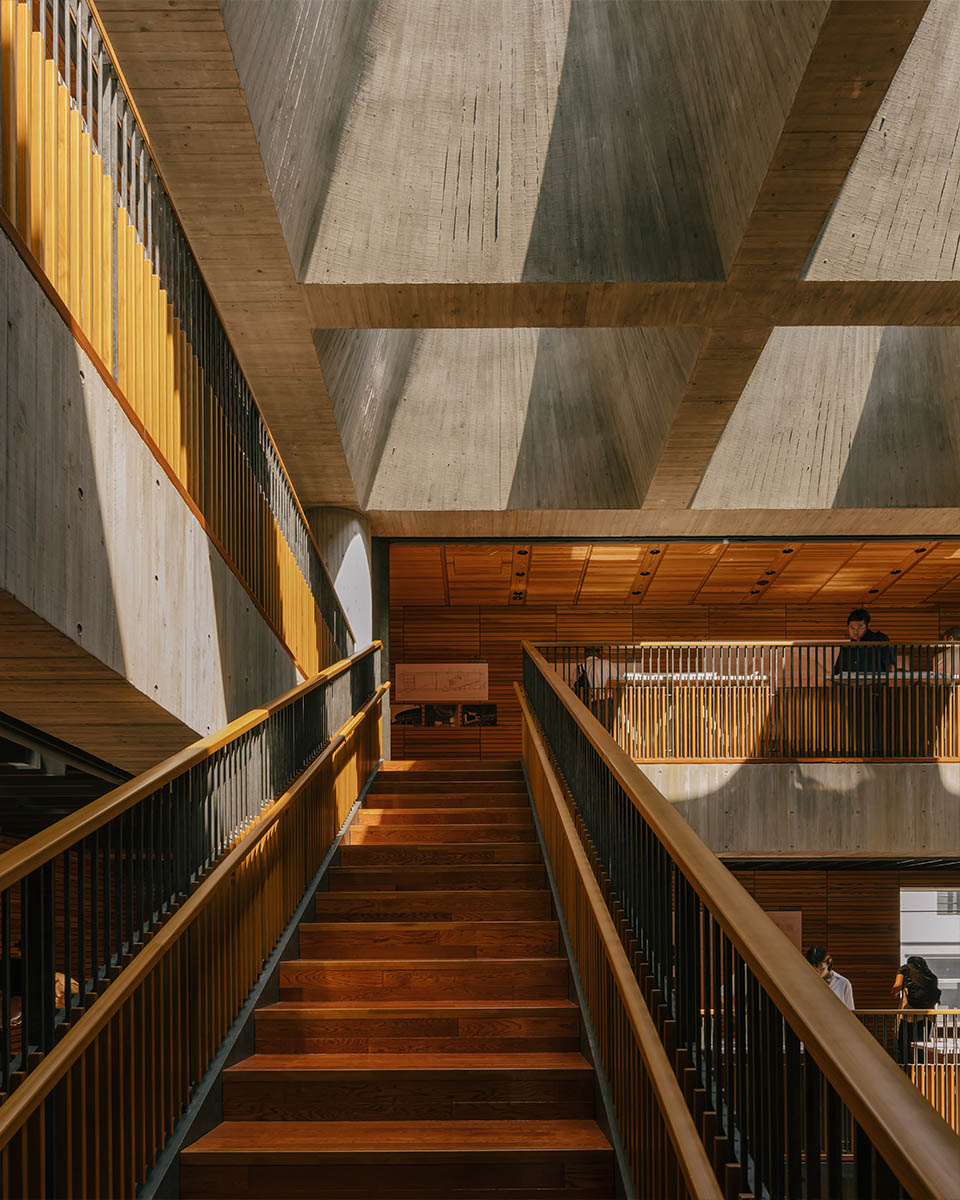
Design Inspired by the Ancient Jomon Aesthetic
Kioi Seido draws inspiration from the Jomon period, a prehistoric era known for its handmade pottery, natural materials, and expressive forms. This influence is evident throughout the building, which combines raw industrial elements with warm organic textures. Heavy concrete surfaces are softened by the presence of wood, creating a primal yet peaceful mood. The result is a modern structure that feels deeply connected to Japan’s ancient visual language.
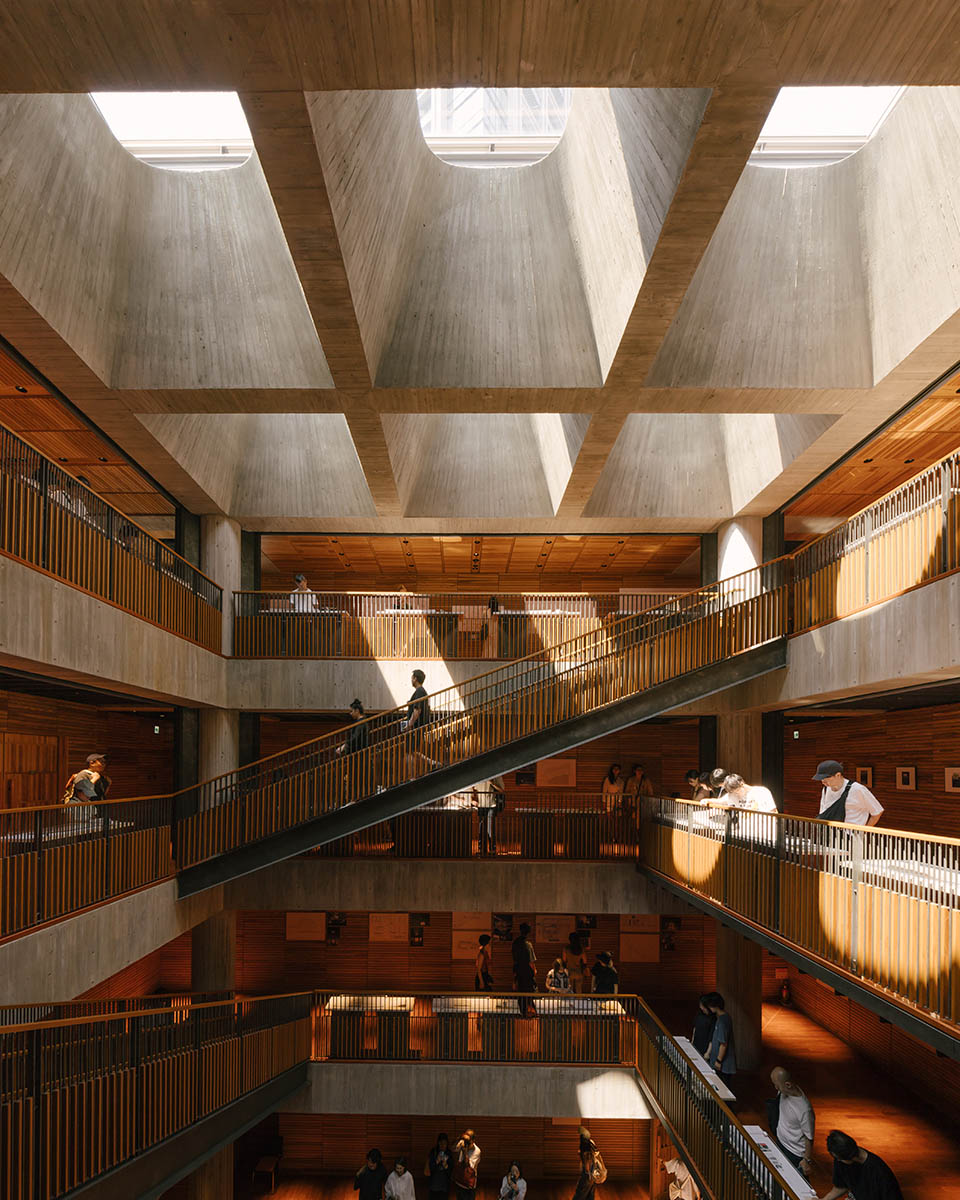
A Vertical Journey From Darkness to Light
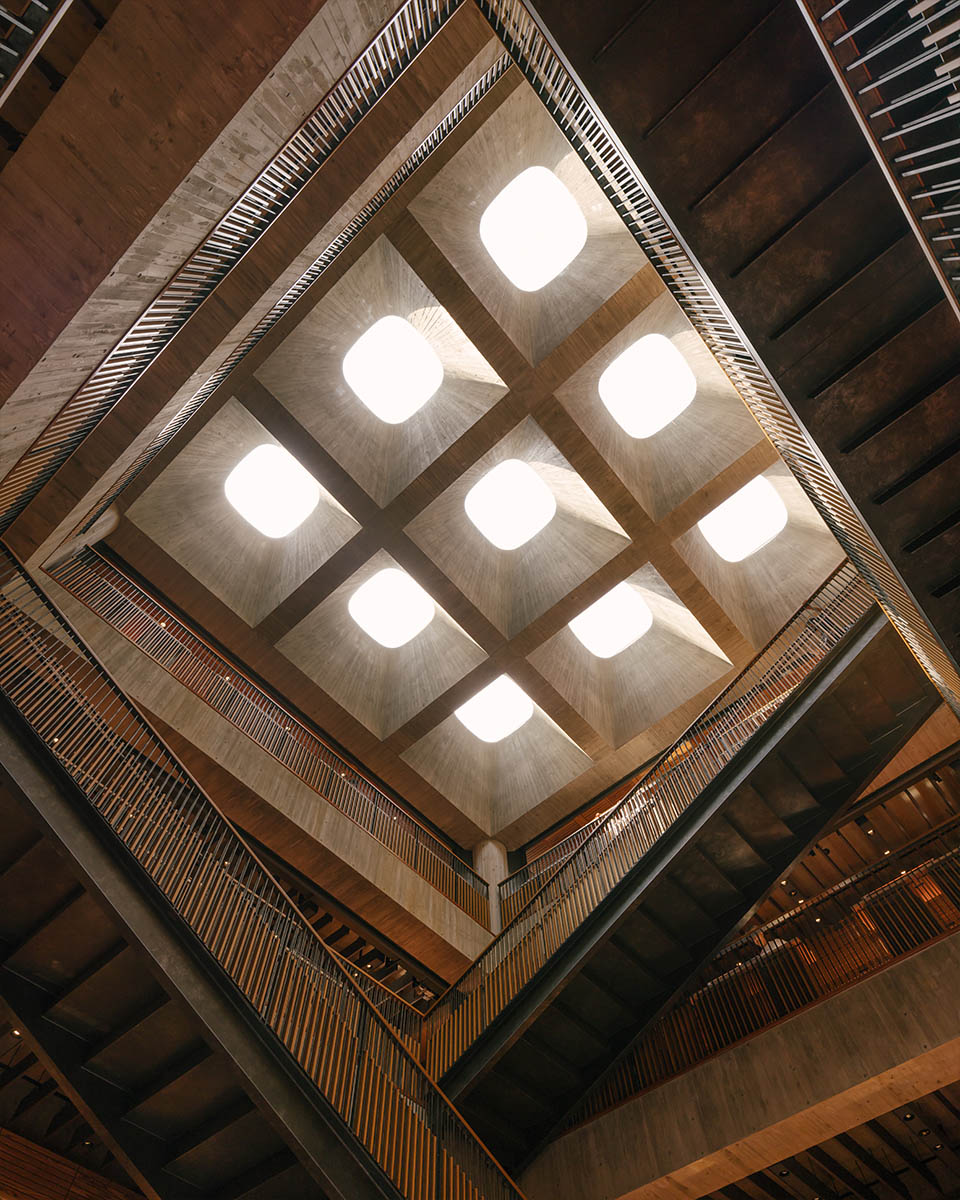
The building features a central skylight that channels daylight through the upper floors, creating a luminous core. With minimal openings on the exterior glass shell at higher levels, light seems to descend from above rather than enter from the sides. This creates a serene interplay between shadow, brightness, and material that changes throughout the day, turning the building into a living light sculpture.
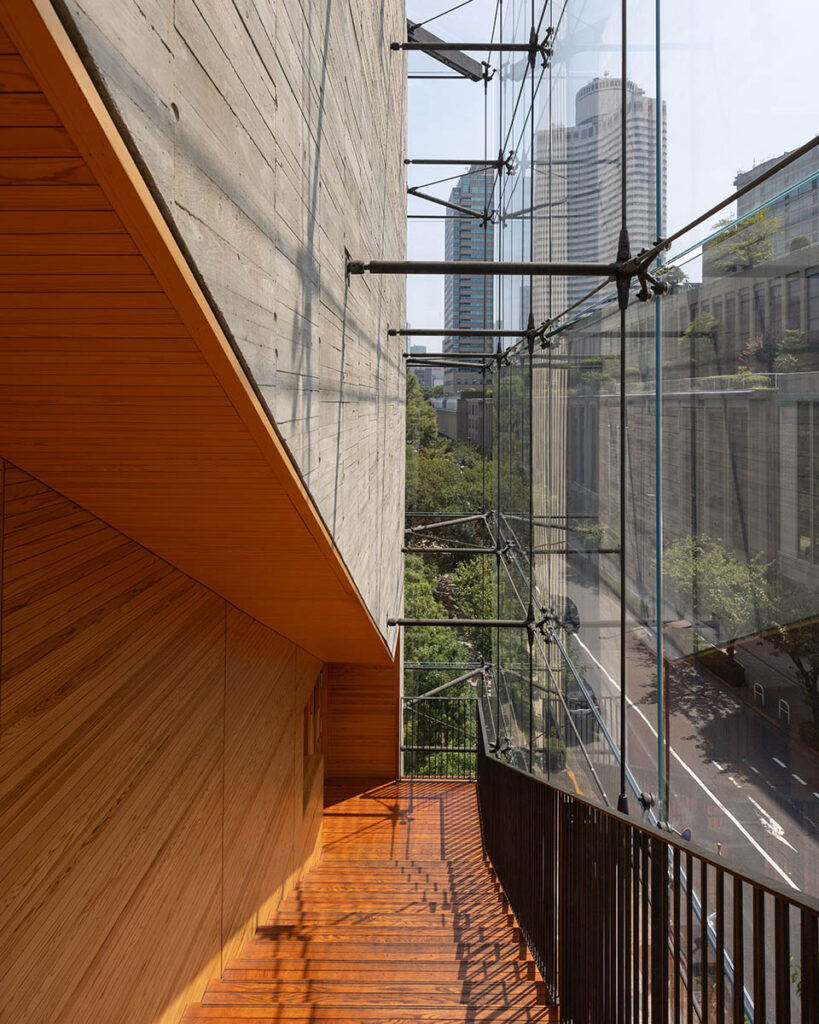
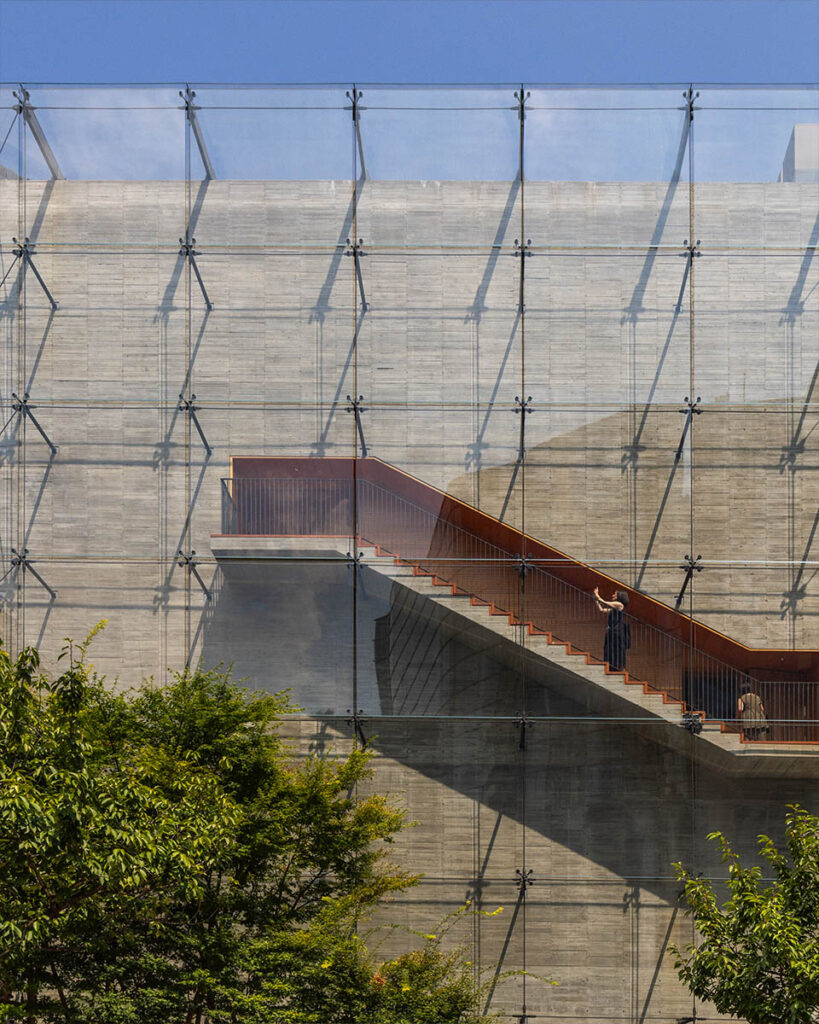
A hidden door within the main atrium leads outside to a floating staircase attached to the main facade. It’s a playful moment where you feel as if you are floating within the cityscape, sandwiched between the raw concrete facade and the transparent glass curtain wall.
Open Days / Opening Hours
The building is only periodically open to visitors when special exhibitions are on, and for the majority of the time remains closed to the public. It was first opened to the public in 2023 for a limited time and again briefly from July to September 2025, to showcase Naito’s, 40-year collection of sketches and diaries, which was when these photographs were taken.
Upcoming Openings
The building is currently closed with no scheduled public openings. Any future openings will be published and updated here on this website.
Visiting Tips
The building gets very busy and popular with the Instagram crowd (rightly so) and this can get in the way of appreciating it’s beauty. Arrive early and try to avoid weekends. It looks good in all light conditions, but at midday the light will stream deep into the atrium casting interesting shadows across the interior.
Location
Address:
Kioi Seido
3 Kioicho, Chiyoda City, Tokyo 102-0094, Japan
Getting there & Access
The building is located in central Tokyo and is a short walk from Kojimachi / Yotsuya and Nagatcho stations.
Project Details
Completed: 2022
Architect: Hiroshi Naito
Architectural Style: Japanese Modernism
Photographs : © Finbarr Fallon (2025)